Index to Facebook Group Alphabetical Series

I am a member of the Facebook Group “New Zealand Lapidary, Rocks, Minerals, Fossils”. The Administrators invited members to submit photos each week of a stone, mineral or fossil in their collection that starts with a letter of the alphabet. My first Post was made on 1 May 2021. Since then, I have re-posted each one on TumbleStone, two at a time:

“A” is for “Amygdaloidal”
“B” is for “Botryoidal Chalcedony”
“C” is for “(Fossil) Coral”
“D” is for “Dendrites”
“E” is for “Entrance”
“F” is for “Fossil Worm Casts”
“G” is for “Green Hydrogrossular Garnet”
“H” is for “Hematite Jasper”
“I” is for “Ichnogenus Protovirgularia”
“J” is for “(Picture) Jasper”
“K” is for “Kai Iwi Beach Stone”
“L” is for “Leithfield Beach Petrified Wood”

“M” is for “Muscovite Mica from Joyce Bay”

“N” is for “November in the Calendar”
“O” is for “Opaque Orepuki Orbicular Jasper”
“P” is for “Planet in a Pebble”
“Q” is for “Quartzite Stone from Kakanui”

“R” is for “Riverton Rocks Red Rock”
“S” is for “Slope Point Stone”
“T” is for “Timaru Today”
“U” is for “Unusual Variations of Trace Fossil Stones”
“V” is for “The Chevron Shape of Trace Fossils”
“W” is for “Ward Beach Zoophycos”
“X” is for “X-figures when veins cross in a stone”
“Y” is for “Yellow Beach Stone from Kaikoura Coast”
“Z” is for “Zoomorphic Shape in Stone”

“K” is for “Kai Iwi Beach Stone” and “L” is for “Leithfield Beach Petrified Wood”

The following are my Posts for “K” and “L” in the alphabetical series of a Facebook Group I belong to, “New Zealand Lapidary, Rocks, Minerals, Fossils”. The first Posts in this Series can be found here.

“K” is for “Kai Iwi Beach Stone” – This beach, about two kilometres from my home, is probably named after the Kai Iwi Stream that emerges here at the coast, a few kilometres north of Whanganui. Kai Iwi Beach is at the small town of Mowhanau, site of the Kai Iwi Beach Holiday Park run by Bruce Taylor (another Group member) and his wife. There are usually not a lot of stones on this beach but I have occasionally been collecting mainly iron-stained quartz to tumble-polish, discovering some nice-looking pebbles, like this one.

For more on the Kai Iwi Beach stones I have tumble-polished and more about the beach, see the previous TumbleStone Post here.

“L” is for “Leithfield Beach petrified wood”. I wrote in a post on this Facebook Group on 26 August 2020: “Yesterday I visited Leithfield Beach, just north of Christchurch, for the first time, mainly because at least one person had posted in this Group recently that he had found petrified wood there. I have found very few specimens of petrified wood in my fossicking career and have never been sure of its identification. So I walked Leithfield Beach for a couple of hours while rain showers came across. I was delighted to find five pieces of petrified wood that were obviously petrified wood because they actually looked like wood!”

As Jocelyn Thornton wrote in “Gemstones”, wood can be turned to stone when it is buried in waterlogged sediments carrying dissolved minerals which soak into the wood and replace the organic material. The wood’s cell walls usually act as a “template” for the mineralisation, retaining the wood-like look.

I have yet to repeat my fossicking success of that day in relation to petrified wood.

See here for the next Post in this Series, and here for the Series Index.

“I” is for “Ichnogenus Protovirgularia” and “J” is for “(Picture) Jasper”

A Facebook Group I belong to, “New Zealand Lapidary, Rocks, Minerals, Fossils”, invited its members to submit photos each week of a stone, mineral or fossil in their collection that starts with a letter of the alphabet. The first Posts in this Series can be found here. The following are my Posts for “I” and “J”.

I” is for “Ichnogenus Protovirgularia”. This argillite stone from Gemstone Beach contains a trace fossil shape that has been identified by a trace fossil researcher as belonging to the Ichnogenus Protovirgularia.

A trace fossil is an “ichnofossil” – they are identified by their shapes (not by what made the shapes as this may not always be known). The term is derived from the Greek word “ichnites” meaning “footprint”. An “ichnogenus” is a group of trace fossils with similar characteristics (a “genus” is an intermediate category between “species” and “family”). Ichnogenus Protovirgularia are trace fossil shapes consisting of a small keel-like trail which is composed of an elevated median line and lateral wedge-shaped appendages alternating on both sides”, including lines of chevron shapes (as in this stone I found on Gemstone Beach). They were given this name in 1850 by Frederick McCoy, an influential Irish palaeontologist, who believed he was seeing the actual fossil of an ancestor of Virgularia mirabilis, the slender sea-pen, hence the term “proto-virgularia”. It was not until 1958 that the shape was identified instead as a trace fossil (and one which was made by quite a different animal).

It is thought that the trace is usually the product of locomotion (travel movement) produced by small bivalves, a burrow resulting from the rhythmic action of a muscular cleft-foot. On the southern coast, these traces are called worm-casts – it is thought that the casts were left as the worms tunnelled through mud and compacted the (excreted?) sediment behind them. It is not yet clear to me what left the trace on this Gemstone Beach stone, and I am not yet 100% convinced that this trace isn’t something other than Protovirgularia. More details on Ichnogenus Protovirgularia and trace fossil stones can be found here.

“J” is for “(Picture) Jasper” – Picture Jasper from Birdlings Flat.

Jasper is usually described as a form of cryptocrystalline silicon dioxide (quartz), as are a number of other rock types such as chalcedony, agate, carnelian, chrysoprase, chert and flint. “The Photographic Guide to Rocks & Minerals of NZ” defines “cryptocrystalline” as meaning crystals that are less than 0.001 mm in size, too tiny to see even using a hand lens. Jasper is distinguished by incorporating other materials that give it opacity (blocking the light) and colour. The Dorling Kindersley/Smithsonian book, “Rock and Gem”, states: “Brick-red to brownish-red jasper contains hematite; clay gives rise to a yellowish-white or grey, and goethite produces brown or yellow” (see scan of book page below). Names for types of jasper often refer to aspects of their structure or composition – banded, orbicular, moss, brecciated, or jasp-agate. But sometimes names relate to surface appearance and patterns – mottled, spider-web, egg pattern, and picture. Patti Polk, in her book “Collecting Rocks, Gems and Minerals”, defines picture jasper as containing “a dazzling array of colors and exquisitely detailed patterns that resemble skies, mountain vistas, desert landscapes, and forest horizons”. She also refers to “warm tones of tan, gold, yellow, blue, green, and browns all swirled together in strikingly outlined picturesque scenes”.

I found this small picture jasper on Birdlings Flat about three years ago. Its pastel tones, the contrasts between light and dark, and the way a number of small cracks and fault-lines break up the surface pattern all contribute to its desert-canyon-landscape-picture. [This stone was Stone Eight in the Lockdown Stones of the Day Series.]

For the next Post in this Alphabetical Series, see here. You can find the Index for the Series here.

Twenty Thesis Milestones for Lynley, Part Two

I recently sent 20 milestones to Lynley. She is getting close to submitting her doctoral thesis on the experiences of a small group of Māori families coping with lives shaped by poverty, stress, insecurity and uncertainty. More about the background to this, and on the first eight milestones, can be found in Part One.

These 20 milestones are polished beach stones from Kakanui in North Otago. This Post continues the consideration of each stone, starting with Stones 9 and 10:

Stone 9 is grey with white flashes and hints of rust-orange. It has a complex composition. By contrast, Stone 10 is more uniform, though its basic grey colour varies subtly across its surface, and there is a small flash of white on one side. It also has tiny veins within it. Both stones demonstrate subtlety and complexity, though in different ways. I am unsure of the identification of Stone 9 though Stone 10 could be a quartzite (of a different variety than Stones 1, 4 and 8).

Stones 11 and 12:

Stone 11, green and white in colour, is one of the larger stones, partly due to having some depth (it’s not a flat stone). The drifts of white amongst the green caught my attention when I spotted it on the beach. I don’t know what type of stone it is. Stone 12 is probably petrified wood. The organic wood material has been replaced and replicated with a mineral precipitating out of solution as water moves through it over a long period of time. During this replacement, the wood’s cell walls act as a “template” for the mineralisation. An important pre-condition is the wood has been buried in water-saturated sediment or volcanic ash. The presence of water reduces the availability of oxygen which inhibits aerobic decomposition by bacteria and fungi. Other plant fossils are usually impressions or compressions of a plant but petrified wood is a three-dimensional representation of the original organic material.

Stones 13 and 14:

Stone 13 could be another jasper, different in appearance from the other two jaspers, Stones 3 and 7 (discussed in Part One). There’s a tracery of fine light-coloured lines across it which provide interest and character. Stone 14 could be another quartzite. Its clouds of mineral colour and clear silica veins give a significant sense of depth.

Stones 15 and 16:

These two stones are predominantly creamy yellow but Stone 15 has some white in it (along with some dark brown lines) while Stones 16 has a little black, resulting in quite different appearances.

Stones 17 and 18:

Stone 17 is in the shape of a shield, and is likely to be a kind of iron stained quartz. The iron provides patches of an interesting and unusual brown colour, with nearly clear quartz crystals showing through to the surface as well. Stone 18 is of more subdued pastel hues, with a whitish flash along the side, and along the top, which made it stand out on the beach.

Stones 19 and 20:

Stone 19 is probably a type of quartz, having a multi-linear appearance from the way iron has been incorporated into it. It sparkles in the light, either from tiny pieces of mica or, more likely, tiny quartz crystals. Stone 20 is another quartzite, very dark in colour, of a pleasing oval shape. Its drifting clouds are crossed by very fine veins of silica not easily discernable to the naked eye.

These 20 milestones share some things in common with a research thesis. From a distance, the stones have broad sweeps of colour and obvious patterns and lines, just as a thesis has its broad research questions and themes. But up close, the stones contain extraordinary complexity and tiny veins and crystals and points of colour. So too a thesis has been built up, from minutes and hours of research activity and consultation and reading and thinking and writing. The stones are stable and concrete expressions of natural processes, the cementing together of minerals and crystals in extraordinarily complicated ways; the final and completed thesis will represent thereafter the many long and complex processes and contributions that constructed it. A stone is hard; a thesis is hard work. A thesis and a stone can both be very difficult to read. But a thesis and a stone can also both be amazing and brilliant and precious.

Twenty Thesis Milestones for Lynley, Part One

When I was working at the University of Waikato, supervising student research, I sometimes provided polished stones as “milestones” to recognise progress and provide encouragement – see “Hard Won and Well Deserved! The Final Thesis Milestone” and “Nine Milestones at Journey’s End”. I supervised Lynley Uerata’s Master’s thesis before I retired from the University of Waikato. It was entitled “Unpredictable, Incurable, Unemployable? A Collection of Constructed Narratives Exploring the Experiences of People with Chronic Conditions in Relation to Finding and Keeping Work” and was completed in 2011 – see here.

The thesis summary notes: “People with chronic health conditions contend with a complex reality. These complexities stem from the fact that their health conditions are permanent, incurable and their symptoms unpredictable. And, because there is a lack of policies and political mechanisms that acknowledge the complex realities they face, they contend with these by themselves and with the people who are willing to assist them. In some circumstances, they are eminently employable.”

After finishing her Master’s thesis, which gained an excellent grade, Lynley went on to undertake research for her doctoral thesis. This is an even more ambitious and demanding piece of work, and Lynley has faced a number of challenges while working on it. I have provided her with informal advice and support over the years. She is studying the experiences of a small group of Māori families coping with lives shaped by poverty, stress, insecurity and uncertainty. Over the last few months, I have been involved in reading and commenting on drafts of many of the thesis chapters. Lynley is now only a few weeks away from submitting the final thesis. I had sent her some milestones in December last year and, to recognise how close she is to the end of the writing, I sent her 20 polished beach stones from Kakanui.

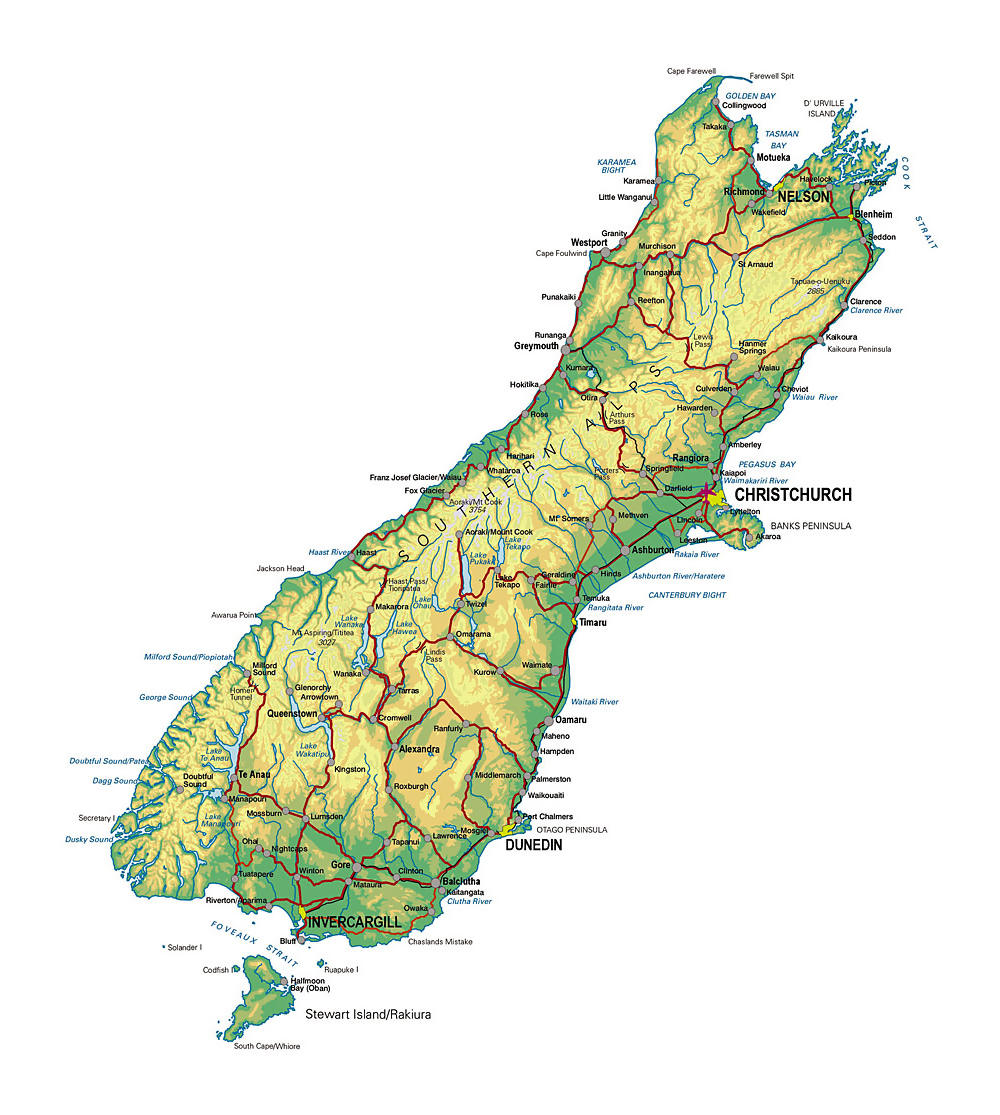
Kakanui is a small town 14 kilometres south of Oamaru in North Otago (see photos below). The Kakanui River and its estuary divide the township in two. There are a number of holiday homes there, especially south of the river, so the population increases particularly in summer. Lynley’s chief supervisor has a holiday home in South Kakanui. The Kakanui area contains a number of limestone formations which include many fossils. Its beaches sometimes have a scattering of interesting stones, like agates and jaspers, amongst the multitude of dull grey stone sthat otherwise dominate. But there’s a stretch of beach, which I call Seadown Beach, starting a couple of kilometres north of the town. Many smooth colourful stones are located there, and it is there that I found the stones that I tumble polished and sent to Lynley.

The 20 Kakanui stones I sent to Lynley were chosen on the basis of their beauty and interest as well as what I thought Lynley would appreciate, given her past choices of stones. For example, she had earlier chosen the following stone when I had “dispersed” the Stones of the Lockdown in 2020:

The 20 Kakanui milestones are of various sizes, colours and types, all found sometime over the past year on the surface of this beach:

Stones 1 and 2:

Stone 1 is one of a number of quartzites amongst the 20 milestones (see also Stones 4, 8, 10, 14 and 20). It is a small stone, the size of a NZ$2 coin but it has a range of red hues through it as well as a couple of distinct clear quartz crystals. Quartzite is a metamorphic rock formed when quartz-rich sandstone has been subjected to high temperatures and pressures. It nearly always smooths easily when tumbled and takes a very good polish. Stone 1 is a type of quartzite that can be found along the north Otago and south to mid-Canterbury coast, ranging in colour from a light brownish-gray through hues of yellow to red (see the entry for Wednesday 26 May 2021 in this Post). Clouds of colour can often be seen in depth in these stones, with small to tiny inclusions of clear quartz. The reds are perhaps the most striking with some of the yellows also being very interesting (Stones 4 and 8).

Stone 2 (photos above – type unknown) is a similar size to Stone 1 but its colours and patterns are very different. Strong white patches are framed by darker colours, with tiny black and grey veins across it, offset at one point by a small fault-line.

Stones 3 and 4:

Stone 3 is a gorgeous dark red brecciated japser. It is five times the size and weight of Stone 1, partly because it is much thicker. Jasper is a form of cryptocrystalline quartz (silicon dioxide) (other forms include chalcedony, agate, and carnelian). “Cryptocrystalline” means that the crystals in the stone are too tiny to see even using a hand magnifying lens, a result of the metamorphic forces of heat and pressure. Jasper is distinguished from other form of cryptocrystalline quartz by the incorporation of minerals that give it opacity (blocking the light). A brecciated jasper has been torn by pressure into small angular pieces, with quartz (or other minerals) filling in the often tiny gaps between. A diversity of different types of jasper can be found at Kakanui (see Stones 7 and 13; also see the entry for Saturday 22 May 2021 in this Post and Friday 25 June 2021 in this Post).

Stone 4 (photos above) is another small quartzite, like Stone 1, but of quite a different colour. It’s as if the neutral grey is the base material of the stone, with the creamy yellow clouds moving through it.

Stones 5 and 6:

With Stone 5, the dark red jasper-type colour of Stone 3 has been reduced to very fine veins running through a light coloured base material that looks like quartz. Stone 6 is much larger – it contains many tiny fossils, especially shells. This type of stone, probably ancient fossil sea floor, is one that I keep a look out for at Kakanui (I found a number of them when visiting the beach in June this year – see the entry for Friday 25 June in this Post). This is an unusual type from a tumble polishing point of view – it needs to be tumbled only in a fine grit to become smooth and shiny, not requiring tumbling in polish powder.

Stones 7 and 8 are distinct contrasts in size, with Stone 7 being one of the seven smallest stones of the 20 and Stone 8 being the largest:

Stone 7 is a jasper, as is Stone 3, but a different kind. It is not brecciated, and has a variety of red and yellow hues in it. There is a vein running through it with which the colour variation is associated. Stone 8 is a quartzite, 6 cms long and 4.5 cms wide, a thin flat stone (a “skimmer”). It shares characteristics with the previous two quartzites – like Stone 4, it has yellow clouds within a neutral grey base, though the yellow is brighter and more intense, and it has flecks of the red that dominates Stone 1.

Part Two of this Post looks at the rest of the milestones, Stones 9 to 20.

FB Group Posts: 26, 27 & 30 June 2021 – Kakanui, Timaru and Ward Beach, Then Home

This is the seventh and last Post on my June 2021 stone collecting trip to the South Island, and is also the 17th and last Post in the Series of my daily Posts in the Facebook Group “New Zealand Lapidary, Rocks, Minerals, Fossils”. The first Post on my June trip is the Sunday 6 June entry in this Post, and the first in the Facebook Group Series is here.

Saturday 26 June 2021: Featuring ten stones from my last visit to the beach near Kakanui this trip. I spent four hours there, and a bit of rain ensured wet stones for easier spotting of the colourful ones.

The first five stones:

The last five stones:

Sunday 27 June 2021: My first visit to this particular section of a south Timaru Beach (at the end of Ellis Road, near Jack’s Point lighthouse). It was a cool foggy day, and I spent about three hours fossicking.

I looked mainly along the lower part of the beach near low tide, near the waves, where there was a scattering of stones, including quite a few interesting quartzites.

Here are seven green-coloured stones I found:

Ten more of the stones collected today, showing some of the diversity on this beach:

Monday 28 June 2021: Cold stormy day – travelled to Lincoln, had to cancel a planned visit to Birdlings Flat due to the hail and wind and freezing temperatures.

Tuesday 29 June 2021This is the day I made a Post in the Group’s Alphabetical Series – “I” is for “Ichnogenus Protovirgularia” – not yet posted.

Wednesday 30 June 2021: Ward Beach visit today, the end of my current South Island trip (assuming I am able to catch a ferry tomorrow as planned). Ward Beach is 5 kms east of Ward which is 45 kms south of Blenheim. The geographical setting is spectacular, with steep hills behind the beach. Interesting birds often there, and seals. I managed a fossick today as the weather had improved, the temperature was around 10 to 12 degrees with little wind, and there were only a couple of rain showers. Very heavy swell at the beach so I stayed well back from the waves. Had a good look up the Flaxbourne River just to the south of the carpark.

Eight of the stones collected today:

Here are another six stones found today:

Many of the stones here may not tumble-polish well (I will need to experiment to find out) but I enjoy the pastel colours and trace fossils. The occasional jasper can be interesting, and some of these stones are volcanic. I’d like to know more about the limestone and chert here.

[This was the end of this stone collecting trip. The ferry on Thursday was delayed a couple of hours but I made it home to Whanganui that night, having driven 3,800 kilometres, with 120 kilograms of finds with me.]