Thirty New Zealand TumbleStones for the USA – Part Two: Ten from Kakanui

In Part One of this series of Posts, I explained how I received an email from Sheila in New Hampshire requesting some tumblestones that she could send to friends. I have selected 30 polished stones from three South Island beaches. Part One described the ten from Gemstone Beach. This Post describes the ten from Kakanui while the next Post describes the ten from Birdlings Flat.

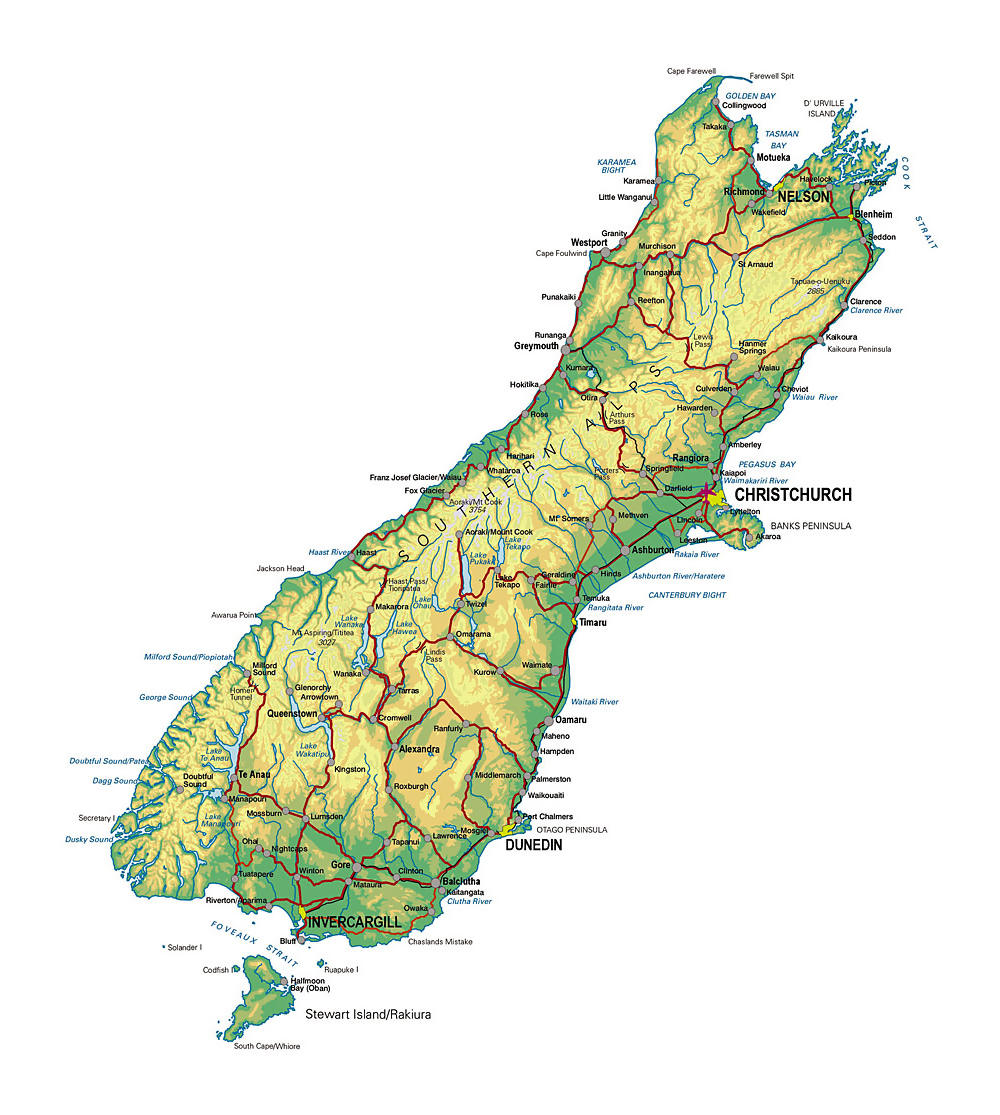
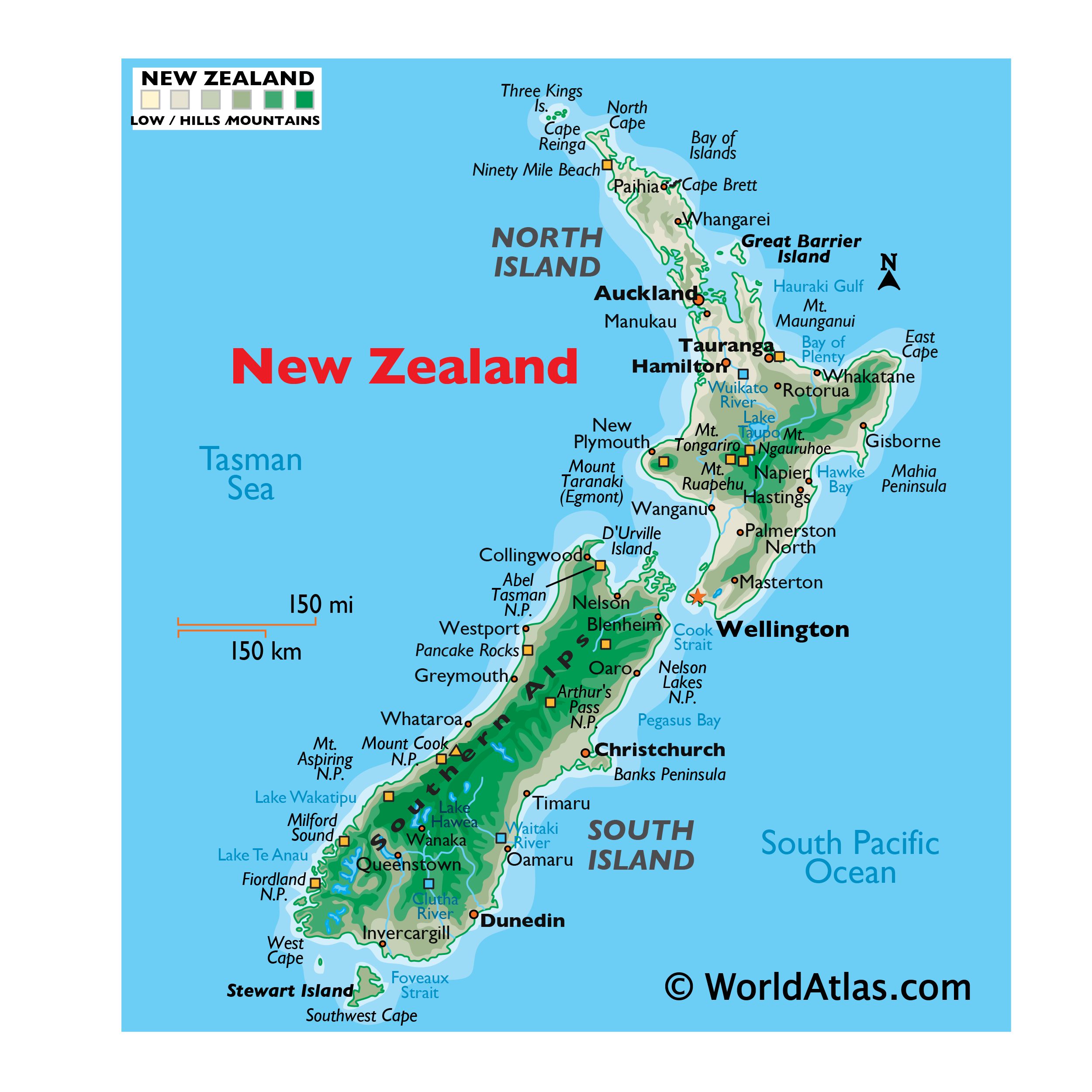
Kakanui is a small town of just under 400 residents about 14 kilometres south of the city of Oamaru in North Otago in the South Island of New Zealand (see maps below). The Kakanui River and its estuary divide the township in two. There are a number of holiday homes there, especially south of the river, so the population increases particularly in summer. The Kakanui area contains a number of limestone formations which include many fossils. But it’s a small beach a couple of kilometres north of the town where I find the smooth beach stones that I tumble polish. The beach has no name, but I call it Seadown Beach after the road nearby.

The stones along this coast will have been brought down by rivers from the Southern Alps to the sea where they have been tumbled in the waves for many thousands of years.

The ten Kakanui tumblestones I sent to Sheila included quartzites and jaspers. Here are the first five stones:

Many of the stones on this beach in Kakanui are quartzites. A quartzite starts off as a quartz-rich sandstone, a sedimentary rock that is grainy and feels like sandpaper. When the sandstone is exposed to high temperatures and pressures, the hard glassy metamorphic rock of quartzite is formed. Quartzite’s wide variety of colours are a result of minor amounts of different minerals being incorporated with the quartz during the process of metamorphism.

Jasper is different from quartzite but is related, with quartz being the common denominator. Quartz is silicon dioxide (SiO2) and is the most abundant mineral found on the Earth’s surface. Jasper is an opaque form of chalcedony which is a cryptocrystalline form of silica. Chalcedony arises when quartz crystals forms at low temperatures in volcanic cavities. The crystals can be so small that they are visible only when magnified, which is the meaning of the term “cryptocrystalline”. Chalcedony comes in a vast array of colours and patterns which gives rise to a wide range of different stones. These include blood-red carnelian, wine-red jasper, brown-banded agate, green-moss agate, apple-green chrysoprase, and black and white onyx. The colour depends on what minerals seep into the rock. The presence of iron causes the red colour in jasper, but jasper can also be green, yellow and brown when other minerals are present instead.

It can often be difficult to decide whether some dark red stones are quartzite or jasper. Here are the second five Kakanui tumblestones sent to Sheila:

This YouTube video (below) is the view of the Kakanui area coast from a drone. The first part of it follows the coast southwards from Kakanui, with good views of the town just after the beginning. After 2 minutes 39 seconds, the video follows the old road which has been claimed by the sea’s eroding forces, travelling southwards towards Kakanui, finishing about a kilometre or two short of the beach that these stones come from.

The last Post in this series is on the ten tumblestones that come from further north, near Christchurch, from Birdlings Flat at the northern end of Kaitorete Spit.

Thirty New Zealand TumbleStones for the USA – Part One: Ten from Gemstone Beach

“Between the ocean and where they stood, drifts of smooth pebbles lay on the sand… gleaming from their recent dousing of sea water. All colours – red, glassy-white, cream, brown, black, speckled, clear green, pale green, dark green… They could hear the clatter of stones inside the belly of each wave as it rushed towards the shore.” (From page 39 of “Craggan Dhu: Time Will Tell” by Kay Cooke, a book inspired by the history, people and environment of Orepuki, a small town of New Zealand’s coastal Western Southland)

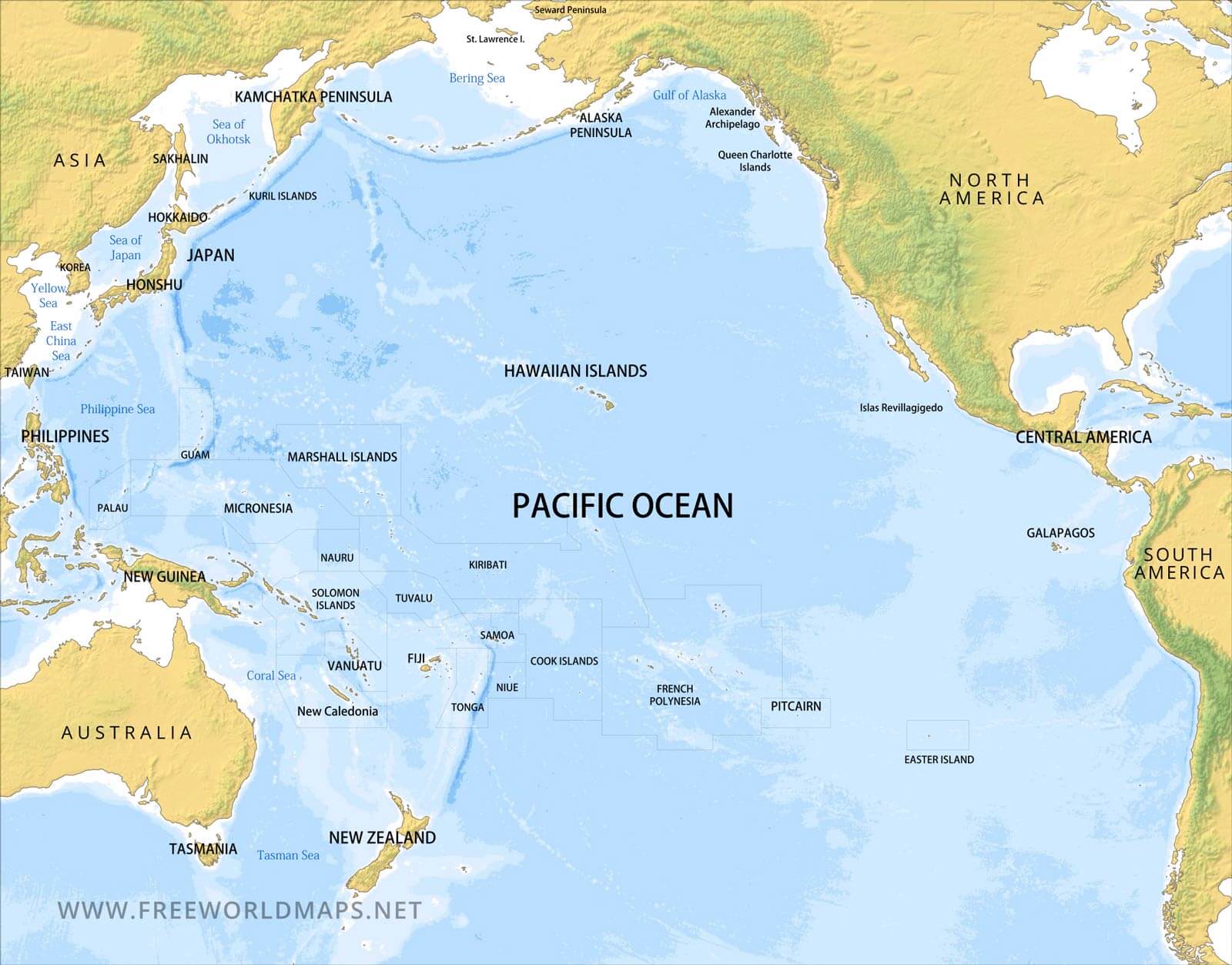
Stones from one country, gathered and tumbled, then going to another, nearly 15,000 kilometres away, across the Pacific Ocean.

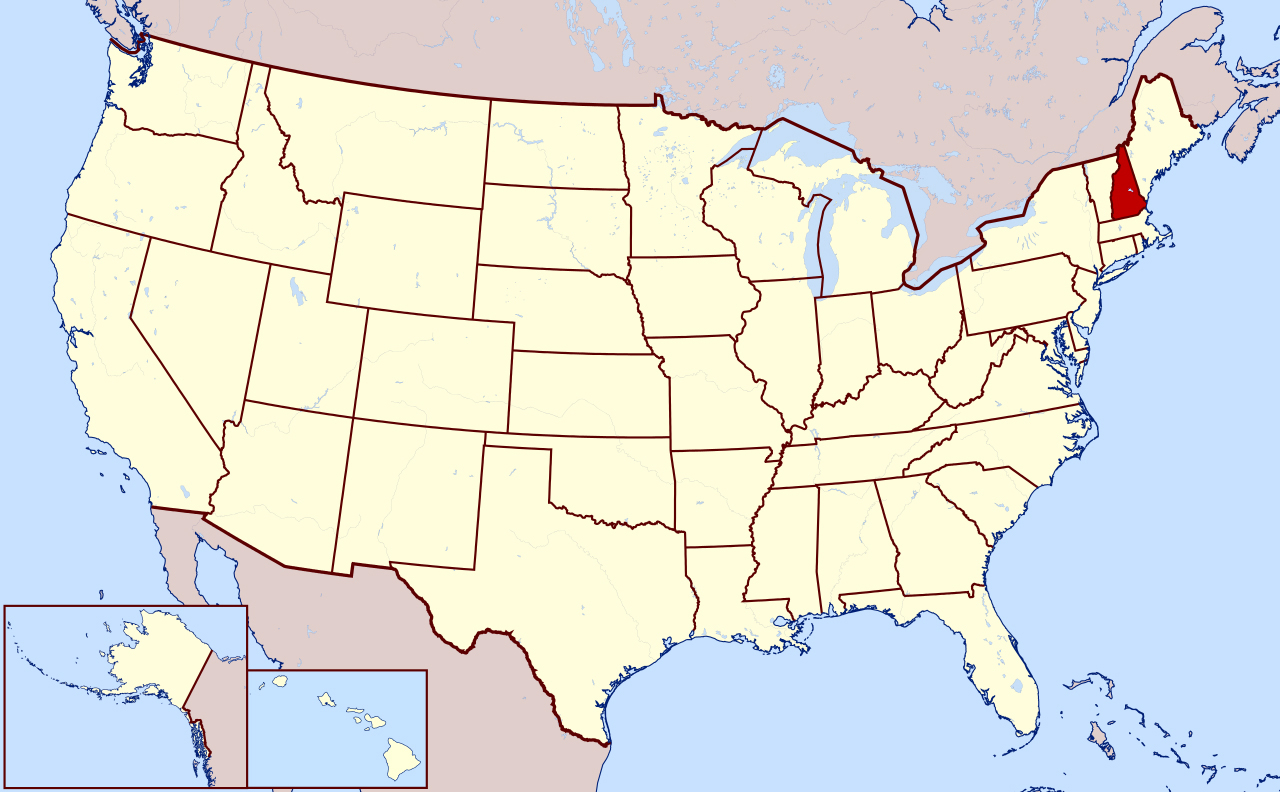
I recently received an email from Sheila who lives in New Hampshire in the north-eastern United States (see maps above). Google says that this small State, one of the 13 colonies that rebelled against British rule during the American Revolution, is nowadays defined by its quaint towns and large expanses of wilderness. Commonly known as the Granite State, New Hampshire has extensive granite formations although schist is also significant in its geology. Sheila has an interest in smaller rocks. She wrote in her email:

I have a bunch of friends who aren’t rock-hounds per se, meaning they aren’t collecting specimens, but who just like pretty rocks with a bit of story to them, so I’m looking for small rocks with interest and character that would comfortably fit inside a closed hand that I can randomly send to people in the mail. (Our mottoes are “All Rocks Are Good Rocks” and “Whimsical When Bored”). A selection such as you would provide to a museum for counter displays to spark interest in children would be wonderful. Frankly you could just box up some raw rocks from the beaches and send them my way, and I’d be delighted, so long as I knew which beach was the source! Or you could send me stones that the tumbler rejected (ie didn’t take a good polish), or stones that you took out of your horses feet (with a note about whose foot it was).

Sheila also attached to her email some photos from TumbleStone Blog of stones that she liked. This gave me a good idea of what kinds of stones I could send her.

I have picked out 30 stones to send Sheila, ten each from three New Zealand beaches (Gemstone Beach, Kakanui and Birdlings Flat). The first ten come from the beach that Kay Cooke refers to in the extract from “Craggan Dhu” (above, at the beginning of this Post), Gemstone Beach, near Orepuki. It is the southernmost of the three beaches, situated on Foveaux Strait at the bottom of the South Island (circled in blue on the map of the South Island below). For more detailed account of stone collecting on Gemstone Beach, see here.

The ten stones from Gemstone Beach include three trace fossil argillite stones (see photos below). Trace fossils, also called ichno-fossils, are the fossilised marks, tracks, burrows and deposits of animals. There is a great diversity of trace shapes to be found in these green-grey stones, along with variations in size and colour. These traces were left in argillite rock about 250 million years ago, in the Permian Era, by the activities of ancient worms at the bottom of the ocean. Argillite is a hardened partly-recrystallised mudstone formed from ocean floor sediments. In the south of New Zealand, the ocean floor was uplifted by massive geological forces and the argillite was faulted and fragmented. Some of these fragments were carried out of eastern Fiordland by streams into the Waiau River then into Foveaux Strait, some eventually washing up on Gemstone Beach. In order to preserve the fossil traces, these stones have often not been completely smoothed in the tumble barrel before being polished, and they often don’t take a high polish.

Two banded ignimbrite stones are also included in these ten from Gemstone Beach (photos below). Banded ignimbrites are volcanic, with distinctive flow bands and small gaseous pockets filled with silica. Ignimbrite originates as the deposit of a pyroclastic flow, which is a hot suspension of particles and gases flowing explosively and rapidly from a volcano. NZ geologist Patrick Marshall originally came up with the term in the 1930s meaning “rain of fiery rock dust”. Some ignimbrite can be very loosely deposited, with lots of pumice in it. If it is buried at depth, it becomes compacted, gases and liquids are squeezed out, and it becomes solid and fine grained and glassy. It has been suggested that this particular banded ignimbrite has been eroded from areas of the approx. 145 million years old Loch Burn geological formation of eastern Fiordland and came down the Waiau River to the coast.

Gemstone Beach has over a kilometre of stones often piled high . Some of these stones may be jasper, stained quartz, colourful quartzite, waxy hydrogrossular garnets, and various breccia and conglomerates (small fragments compressed in a fine matrix). In many instances, for the stones I pick up there, I do not know the exact type of rock from which they originate. Each stone is unique but carries within it a significant part of New Zealand’s geological history. Each stone also tells its own story upon careful reading, and every person can see slightly different messages, landscapes, patterns and depths. These are the “gems” of Gemstone Beach! The five other tumblestones from Gemstone Beach that I sent Sheila are:

To finish with some more photos of Gemstone Beach:

In Part Two of this series of Posts, we look at tumblestones that come from further north, from a little beach just outside of the small town of Kakanui in North Otago.

“Golden” – A Wedding, Some Stones, and Harry Styles

“Loving you’s the antidote…You’re so golden” (Harry Styles, “Golden”)

Martina and Jules got married near Wellington on 24 September, high on a clifftop overlooking a wild sea. Martina is the daughter of my wife Petra. The wedding had been due to take place three months earlier but had to be postponed because of covid-19 pandemic restrictions. Martina and Jules asked me if I might be able to provide about 70 polished stones for the Reception. They would be used to hold down the pieces of card with people’s names on them that indicated their place at a table. A key colour for the wedding was gold so I went through my polished stones, looking for yellow, cream and light coloured ones of the appropriate size. I didn’t have enough so I included stones of other colours as well, sending about 90 in all, so that Martina and Jules could choose the ones they liked best.

Jules’s family have connections to Kakanui and I was able to provide a number of stones from there. Three other places were the source of most of the other stones – Birdlings Flat, Riverton and Gemstone Beach – with a few extras from places like the West Coast.

Wedding guests were able to take “their” stone home with them. A number of people commented on the stones, the interesting colours and the patterns in them. Below are photos of the stones on the name labels, and the two Riverton stones that sat upon the name cards of Petra and I.

I also gave Martina and Jules a personal gift of seven stones, posted to them after the wedding. I chose two of my favourite gold quartzites from Kakanui, representing male and female. There were also two stones from Gemstone Beach – a banded ignimbrite and a hydrogrossular garnet (with a light cloud of gold within). Over a year ago, I had shown Martina and Jules a number of polished stones and asked them which they liked best. Jules indicated the ignimbrite and Martina the garnet. So they now have these two. The other three stones are from Kakanui, including a cream-coloured fossil hash stone, a greyish quartzite and a stone with a delicate red-pink patterning.

The gold in many of these stones echoes the gold making up the wedding rings that Jules and Martina exchanged and now wear. Wedding rings, exchanged during the vows, symbolize the love and commitment to fidelity between two people. As a circle, a ring has no beginning or end, a symbol of enduring love. It is  worn on the fourth finger of the left hand because it was once believed that a vein connected this finger directly to the heart. Gold is a precious metal, shiny and lustrous, recognised as valuable since the most ancient of times, yet a gold ring is practical and hard wearing. The colour gold is the colour of success and achievement. Associated with abundance and prosperity, quality and sophistication, richness and warmth, it is also symbolic for the power of the sun, Earth’s life-giving star. Other associations with gold include wisdom, understanding and spirituality.

Harry Styles was a member of the British pop group One Direction before embarking on a solo career in 2016. One of the songs from his 2019 album “Fine Line” is “Golden”. While not directly addressing issues of weddings and wedding rings, nor gold-coloured quartzites (though love and a relationships figure promnently), “Golden” contains some themes that could perhaps be applicable (lyrics below). [For other TumbleStone Posts with music, see here.]

Golden, golden, golden
As I open my eyes
Hold it, focus, hoping
Take me back to the light
I know you were way too bright for me
I’m hopeless, broken
So you wait for me in the sky
Brown my skin just right
You’re so golden
You’re so golden
I’m out of my head
And I know that you’re scared
Because hearts get broken
I don’t wanna be alone
When it ends
Don’t wanna let you know
I don’t wanna be alone
But I can feel it take a hold
I can feel you take control
Of who I am and all I’ve ever known
Loving you’s the antidote
Golden
You’re so golden
I don’t wanna be alone
You’re so golden
You’re so golden
I’m out of my head
And I know that you’re scared
Because hearts get broken
…
I know that you’re scared
Because I’m so open
…

TumbleStone Calendar 2021

Each year, for a number of years now, I have produced a photo calendar, mainly to give family and friends for Christmas. I use Diamond Photo online for this (and for photo-books). For each month, you can choose a format for a set of photos, just slightly smaller than an A4 page, with another A4 size page below it containing the month’s dates. The main internationally-recognised holidays are noted, along with some of the main New Zealand ones. The online construction of the calendar can be challenging, and I have learned to order an initial copy to check the colour and the text before ordering the final version.

The theme of my calendar for three or four years was places I have travelled to. One year I made a calendar for family members relating to the history of where they lived. More recently, the themes of my calendars have usually related to stones and where I found them. My 2021 calendar is titled “Worlds in Stone”. Each month features four close-up photos of colourful or patterned stones, with an indication of where they come from. For example, January’s stones are from Gemstone Beach and February’s are from Kakanui.

March has photos of four of the Stones of the Lockdown of March 2020 while April (photo below) features stones collected from Gemstone Beach by my sister, Helen. Birdlings Flat stones are viewed in May (photo below), Kaikoura Coast stones in June, and Riverton stones in July. August and September present a slight variation of the main theme, with stones from two beaches, Kakanui and Riverton in August and Kakanui and Ward in September (photo below). October is different, featuring four individual and especially unusual stones, some of them containing fossils (photo below). Leithfield Beach provides all four stones for the month of November. The year finishes off with stones from four different beaches, including Wakanui in Mid-Canterbury.  

Keeping in mind that this is essentially an amateur production, if you want to buy one of these 2021 Calendars for yourself, email me at john.tumblestone@gmail.com. It will cost you $25 (postage included, in New Zealand).

50 Riverton/Aparima Tumblestones for Te Hikoi Museum Shop: Part Three

Part One of this Series of Posts provided an introduction to Riverton/Aparima and 12 of these 50 polished tumblestones, while Part Two considered a further 15. The remaining 23 are the subject of this Post.

First there are eight stones that are mainly red or hues of red.

Eight stones of various colours:

And the remaining seven tumblestones from the beaches of Riverton/Aparima:

UP-DATE: By the end of February 2021, 12 of these 50 stones had been sold by Te Hikoi. Very pleased that they have found a home somewhere. The rest are still waiting…

FINAL UP-DATE: In mid-2021, the Te Hikoi shop received a gift of polished stones so mine were no longer needed to sell.

50 Riverton/Aparima Tumblestones for Te Hikoi Museum Shop: Part Two

Part One of this Series of Posts provided an introduction to Riverton/Aparima and 12 of these 50 polished tumblestones. This Post considers a futher 15 stones.

Three of the stones are banded ignimbrite, a kind of volcanic stone with distinctive flow bands and small gaseous pockets filled with silica. Again, like fossil worm cast stones, these can be found on beaches between Riverton and Orepuki. See here for more information.

Many stones on the beaches in this area are dark-coloured, gray or black-and-white. However, closer examination often reveals subtle variations in even the darkest. The following six are good examples of these types.

But there are also a diversity of white stones, including these six.

The third and final Post in this Series looks at the remaining 23 of these 50 stones.

50 Riverton/Aparima Tumblestones for Te Hikoi Museum Shop: Part One

Riverton/Aparima is a small seaside town with about 1500 residents but its numbers swell significantly over summer with the influx of local and international tourists. Many of these stay in the cribs (baches or holiday homes) of Riverton Rocks. Located about 30 kilometres from Invercargill, Riverton/Aparima is the oldest permanent European settlement in Southland.

“Te Hikoi Southern Journey” is a museum in Riverton/Aparima with a gift store and information centre attached.​ It holds an interesting collection of regional historic artifacts, with its displays focusing on local Maori history, whaling and the area’s European settlements. The museum is located at 172 Palmerston Street, on the main street just before the bridge over the Aparima River on the way to Riverton Rocks. See here for a brief YouTube clip on the museum. Te Hikoi has a geology-themed Discovery Depot which includes access to a library of geology resources, such as drawers of rock samples, and it makes available a pamphlet for a children’s rockhound experience in the local area. Outside, on the bank of the estuary, are a number of large rocks set in concrete, representing aspects of the geology of the Southland area, with an attractive and informative Information Panel.

The gift shop often has stones for sale. When I visited last week, near the reception desk were two bowls, one with some “Gems of the World” (apparent in the YouTube clip mentioned above), the other with some small tumble-polished stones from Orepuki (Gemstone Beach). On a shelf in the book section were also half a dozen larger hydrogrossular garnets. There is an opportunity to add some local Riverton/Aparima stones, which I have agreed to provide.

I have selected 50 tumble-polished stones from the three southern-most beaches of Riverton Rocks – Mitchell’s Bay, Henderson’s Bay and the Back Beach (Howell’s Point). The Back Beach, right at the end of the Rocks Highway, is the main source of my stones, a 500 metres sweep of sand and stones on the shore of Foveaux Strait, facing Stewart Island /Rakiura.

It is difficult, in many instances, to identify the exact type of rock of origin of Riverton/Aparima stones because of the great diversity to be found on these beaches. Each stone is unique but carries within it a significant part of New Zealand’s geological history. Each stone tells its own story upon careful reading (best viewed in bright sunshine), and every person can see slightly different patterns, landscapes, and depths. I selected 50 polished stones that had character and interest. Different people like different kinds of stones so I included a range of colours and patterns.

001
The 50 polished Riverton/Aparima tumblestones. $2 coin (top left) for scale.

Six of the stones (see photos below) are argillite containing trace fossils of ancient worm-like animals from the Permian Era, around 250 million years ago. Such stones can be found at a number of beaches along the coast between Riverton and Orepuki.  

More information on trace fossil stones can be found here .

Six of the 50 stones I sent to the Te Hikoi Museum shop illustrate the complex structure of many stones of the area. Stained by various minerals and subject to a range of geological forces, they come in different colours and patterns. Below are photos of these six as well as as close-ups of their structure.

See Part Two in this Series for details about a further 15 of the 50 stones.