TS2 – BIRDLINGS FLAT: MY STONE FOSSICKING

rptx

I first visited Birdlings Flat in May 2016. I have made a number of other visits since. The following are Posts on TumbleStone Blog describing those visits, listed in chronological order:

Return to BIRDLINGS FLAT

HOME – FOSSICKING BEACHES – BEACH STONES – TUMBLE-POLISHING

TS2 – BIRDLINGS FLAT: GEMSTONE & FOSSIL MUSEUM

rptx

The Birdlings Flat Gemstone and Fossil Museum is located at the end of Hillview Road at Birdlings Flat. A yellow sign is placed at the end of the road whenever the Museum is open – entry is free.

Google Maps1
Location of Museum in Birdlings Flat. Source: Google Maps.

The Museum was started in February 2003 by Vince and Colleen Burke, containing many of the polished stones he has collected off Birdlings Flat beach for a number of decades. It also contains large colourful agates, most of them collected from different parts of Canterbury, as well as many fossils. The Museum has been for sale for a while, so there is no guarantee of its continued existence.

TumbleStone Blog Posts on Birdlings Flat Gemstone and Fossil Museum:

Return to BIRDLINGS FLAT

HOME – FOSSICKING BEACHES – BEACH STONES – TUMBLE-POLISHING

TS2 – HYDROGROSSULAR GARNET

rptx

INTRODUCTION TO HYDROGROSSULAR GARNETS: Unlike the garnets we know as precious gems, hydrogrossular garnets come from dense rock masses, not crystals. Technically, hydrogrossular garnets are a calcium aluminium garnet with hydroxide partially replacing the silica found in other garnets. The first ever identification of hydrogrossular garnet in the world was in 1943 by Colin Hutton, from stones found in Nelson, and it is the most widely spread of the 13 minerals first described from New Zealand. Hydrogrossular stones (or, to be more accurate, stones that have some hydrogrossular garnet in them) often feel waxy and some are partly transparent. “Grossular” derives from the Latin word for gooseberry, referring to the light-green colour of some hydrogrossular garnets. However, other minerals get mixed in, and white and brown are two other common colours of hydrogrossular stones. Hydrogrossular stones are easily polished and make excellent pendants.

In her book “The New Zealand Rockhound” (1981), Natalie Fernandez has an entry on “Grossular Garnet” on page 50 (see photo above, left): Grossularite or hydrogrossular garnet is a massive form of calcium garnet…Colour: A wide range, patchy. Pale green, greyish, yellow, white, brown. Occasionally shades of orange, darker green, even blue and pink. Opaque to translucent. Lustre: Waxy, vitreous. [Note the treatment of hydrogrossular garnet and grossular garnet as relating to the same type of stone, something sometimes done by authors. I am not yet clear on the significance of the differences between the two.] On page 34 of “A Photographic Guide to Rocks and Minerals of New Zealand” by Nick Mortimer, Hamish Campbell and Margaret Low (2011) is an entry on “Hydrogrossular” (see middle two photos above). Its association with serpentinite is noted, and its presence in rodingite. Their entry on “Rodingite” states: “The main minerals in rodingite are calcium-bearing hydrogrossular garnet, plagioclase and actinolite.” In Thornton’s pages on “Garnet” in her booklet “Gemstones”(1985) (also available online), she refers to a hydrogrossular stone with a dark crystal of diopside in it (see photo above, right). Kirk Feral notes that hydrogrossular garnets often contain “black inclusions of Chromite”. Certainly, Gemstone Beach specimens often have dark inclusions, some black, some grey, some silvery.

Hydrogrossular garnets are probably the most sought after stones on Gemstone Beach. I often find it hard to walk past even the tiny ones, partly because they shine so brightly. To find a larger one is always a thrill. But I still have to check each possibility carefully, as some turn out to be quartz and others turn out to be argillite – the angle of the sun can make identification deceptive. Most hydrogrossular garnets have a waxy feel, and they lack the crystalline character of quartz – it takes a while to develop a feel for their subtle differences. I am grateful to those fossickers I have met on Gemstone Beach who have shared their knowledge with me, some of whom have even given me specimens they have just found. And seeing stones in museums and private collections has also been very important in helping me to spot stones on the beach.

TYPES OF HYDROGROSSULAR GARNETS: The following are the types of hydrogrossular garnets that I have come to recognise on Gemstone Beach. This is not a systematic or exhaustive classification, just a basic idea about varieties that I personally have compiled, based on my own observations. The differences will no doubt be due to the incorporation of other minerals to varying degrees. The first type is the translucent light green stone, with little or no other material in it – sometimes it can be a deeper green, maybe even a blue/green. This in many ways is the “classic” hydrogrossular.

Second are similar stones but of different hues, especially grey. Some of these translucent and partly-translucent stones have interesting cloud-like patterns in them.

The third type is the brown hydrogrossular garnet, usually opaque and very waxy, sometimes quite dark in colour, sometimes much lighter. These are my favourite type. They don’t need to be polished to be well worth displaying or wearing.

Fourth are the opaque stones of a variety of colours, white, green, grey, brown, yellow. There is quite a diversity of these, and one stone can contain a number of colours.

Fifth are the white stones with dark “intrusions”, one of the most common types. There seems to be a reasonable uniformity in the white component, though some have a blush of pink in them (maybe attributable to the mineral thulite). The dark “intrusions” do not usually take a polish.

The sixth type is what I call the “porcelain” type – an opaque stone that looks and feels like porcelain china, often having fine blue-green veins. I initially did not think this was hydrogrossular garnet. I have checked with rockhound groups online, and a number of people have identified it as including hydrogrossular garnet.

The seventh type is chalcedony-like, kind of glassy, its surface often rough and broken. It has a subtly different glassy appearance than Types 1 and 2. I initially thought this was not hydrogrossular but again have been advised by more than one source that it is.

TUMBLE POLISHING HYDROGROSSULAR GARNETS: I tend to treat them lightly, often doing only one 400 grit tumble before polishing. This leaves them shiny and reveals clearly the clouds and internal patterning. However, it leaves some holes, occasional small rough patches and lines etc. Tumbling a barrel of hydrogrossular garnets produces a very fine light-coloured slurry. I often add small hydrogrossular garnets to barrels of larger stones, to assist with the tumbling process (increasing the surfaces of contact within the barrel). I often keep one or two rough hydrogrossular garnet stones with a nice waxy feel as “touch stones”, especially the translucent green ones and the rich brown ones.

NOTE ON IDENTIFICATION: The above information about hydrogrossular garnets, and the presentation of examples of these stones from my collection, is shaped by the sources I have access to. These include a small number of published and online sources, other fossickers I’ve met on Gemstone Beach over the past five years, members of New Zealand Facebook Rockhound Groups, and specimens I have seen in museums and private collections. There are two things that have made me realise how tentative the identification of these types of stones can be. First, sometimes “hydrogrossular” and “grossular” are terms used by different people for what seem to be the same kind of stone. But, as Minerals.net suggests, “Hydrogrossular is often regarded as a variety of Grossular, but it is scientifically regarded as two distinct individual mineral species that have a slightly different chemical formula than true Grossular.” Secondly, there seems to be some disagreement even amongst “experts” over whether a stone is a hydrogrossular garnet or not. For example, in August 2020 I posted a photo of a Gemstone Beach stone online, suggesting it might be a hydrogrossular garnet but noting that I wasn’t sure. Someone in North America who had undertaken technical analysis of “hydrogrossular” garnet stones from New Zealand stated that most of them were in fact “grossular” and that my stone was most likely “grossular”. But in the same discussion thread, a geological research technician from a New Zealand university had no hesitation in stating “It’s a ‘hydrogrossular’ for sure”, as did a number of amateur rockhounds familiar with Gemstone Beach.

So the information and stones presented here are basically reflective not of reliable technical scientific analysis but of “local knowledge”, informed as best it can be by a range of sources, but ultimately tentative and fallible.

Posts on TumbleStone Blog about hydrogrossular garnet:

Other TumbleStoneTwo Pages on Hydrogrossular Garnet:

HYDROGROSSULAR GARNET: PHOTOS, PART ONE

HYDROGROSSULAR GARNET: PHOTOS, PART TWO

Return to BEACH STONES

Return to GEMSTONE BEACH: THE STONES

FOSSICKING BEACHES BEACH STONESTUMBLE-POLISHING

TS2 – GEMSTONE BEACH

rptx

Gemstone Beach is probably the most well-known stone fossicking beach in the lower South Island, as implied by its name (which was probably bestowed upon it when tourism signs were developed for the Southern Scenic Route many years ago). The beach lies 70 kms west of Invercargill, and the mountains of eastern Fiordland can be seen from it, further to the west. The beach is on the Te Waewae Bay coast, on the shores of Foveaux Strait. The name “Gemstone Beach” most narrowly applies to a 200 to 250 metre stretch of beach in front of the carpark opposite the “Gemstone Beach” sign just west of Orepuki. However, I use the name to refer also to the beach that runs from the carpark to the mouth of the Waimeamea River, 1.5 kilometres to the northwest.

Important Posts on Gemstone Beach include the Series “Gemstone Beach and Its Stones: An Introduction for the Passing Motorist” and “Gemstone Beach: Location on Te Waewae Bay”

Other Posts on TumbleStone Blog which provide an Introduction to Gemstone Beach:

Other TumbleStoneTwo Pages on Gemstone Beach:

GEMSTONE BEACH: LOCATION ON TE WAEWAE BAY

GEMSTONE BEACH AND ITS STONES: AN INTRODUCTION FOR THE PASSING MOTORIST

GEMSTONE BEACH: MY STONE FOSSICKING

GEMSTONE BEACH: THE STONES

HOME FOSSICKING BEACHESBEACH STONESTUMBLE-POLISHINGABOUT ME

TS2 – BIRDLINGS FLAT

rptx

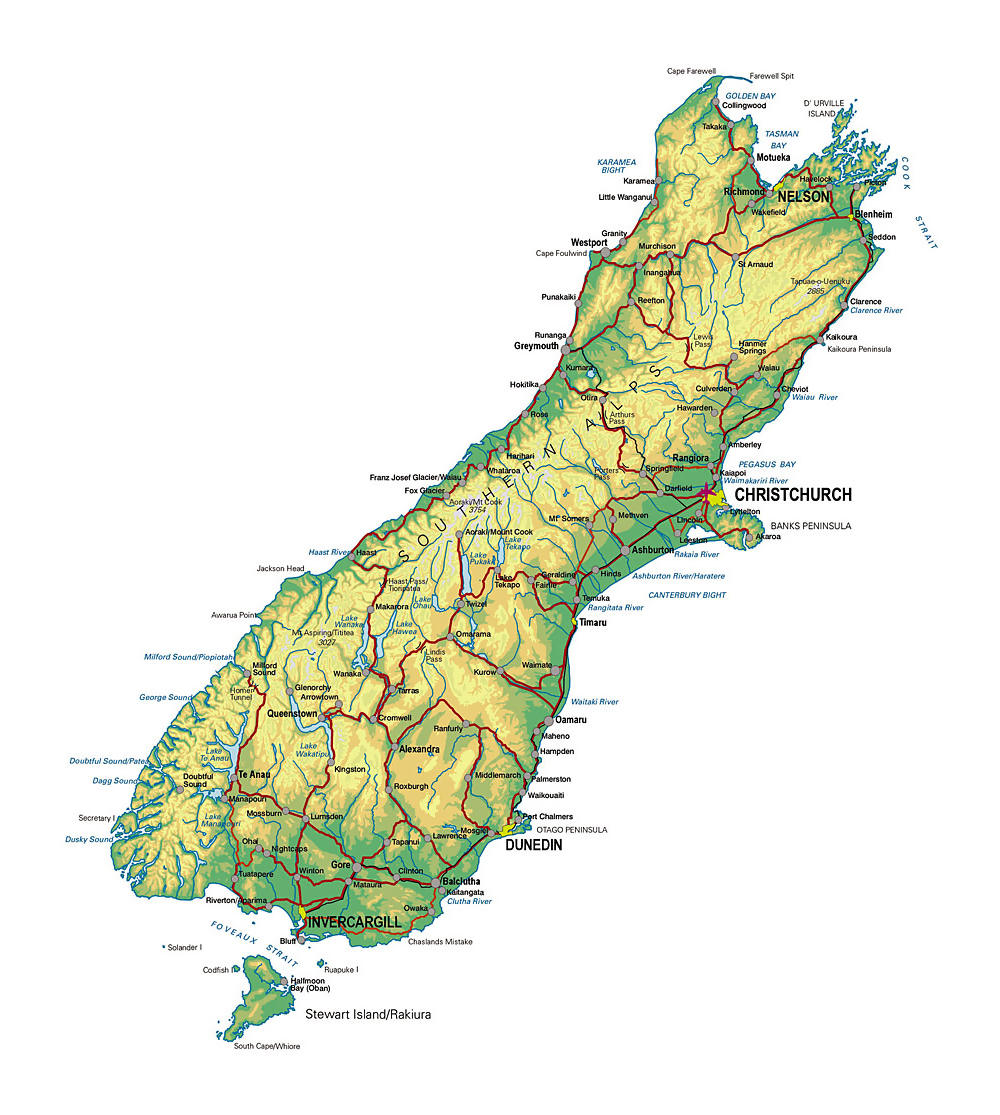
Birdlings Flat is a stone beach immediately south of Banks Peninsula, half-way up the east coast of the South Island. It is about 50 kilometres south of the city of Christchurch. Banks Peninsula is of volcanic origin but the Flat is located on the far eastern end of a large gravel spit called Kaitorete Spit. A good introduction is provided on GeoTrips. The beach at Birdlings Flat is perhaps the most well-known among stone fossickers in New Zealand, especially for small beach agates. But much care needs to be taken when fossicking close to the sea, the waves being strong and dangerous, especially close to the cliffs of Banks Peninsula. There are three pages (so far) on TumbleStone Two on Birdlings Flat – this one of introductory and general information, a second on the Gemstone and Fossil Museum, and a third on my stone fossicking there.

Posts on TumbleStone Blog which provide an Introduction to Birdlings Flat:

Other TumbleStoneTwo Pages on Birdlings Flat:

BIRDLINGS FLAT: GEMSTONE & FOSSIL MUSEUM

BIRDLINGS FLAT: MY STONE FOSSICKING

HOMEFOSSICKING BEACHES BEACH STONESTUMBLE-POLISHINGABOUT ME

TS2 – TUMBLE-POLISHING

00 final

Rotary tumbling is one of the main ways people polish small to medium-sized stones. Vibratory tumbling is the main alternative, being quicker though initially more expensive. Rotary tumblers will smooth and round stones while a vibratory tumbler will polish them in their existing shape. See here and here for more detailed comparisons of the two methods. I use rotary tumble-polishers and have no experience with vibratory ones.

One of the reasons I started TumbleStone Blog in 2016 was the lack of New Zealand-based information on tumble-polishing and, in fact, the existence of very few practical and detailed online sources at all. I hoped to use my experiences to help other beginning tumble polishers.

In November 2017, I started a series of detailed and well-illustrated Posts on TumbleStone Blog called “The Seven Stages in Tumble Polishing Stones”. It went through, step-by-step, the various stages involved in collecting and polishing beach stones using a tumbler with a 4lb barrel. The first Post in the Series is here, while a summary can be found as #2 in “Six Past TumbleStone Posts of Interest to Beginning Tumble Polishers”. However, changes in late 2020 in the grits and polish stocked by my supplier mean that now only six stages are required instead of seven, and a couple of other minor changes have occurred. The original seven stages included: Stage 1 = Stone Collection (not usually included in accounts of tumble polishing); Stage 2 = tumbling in 100 mesh silicon carbide grit; Stage 3 = 220 silicon carbide grit; Stage 4 = 320 silicon carbide grit; Stage 5 = using a tin oxide “Pre-Polish” powder; Stage 6 = tin oxide “Pro-Polish” powder; Stage 7 = a “burnishing” tumble for a week in borax. The change to six stages is set out here.

A two-part series of TumbleStone Blog Posts that appears to have also proved useful for beginners is “What Do I Need to Start Tumble Polishing Stones Myself? And What Will It Cost Me?” Part One covers: The Tumbler; The Siting of the Tumbler; Silicon Carbide Grit; Grit Storage and Tablespoon Measuring; and Disposal of Slurry. Part Two covers: Tin Oxide Polish Powder; Polish Powder Storage and Mixing; Plastic Beads and Bead Storage; Soap for Cleaning and Burnishing; Sieves and Buckets; and Miscellaneous Useful Items. The original series was written in April 2018 but was up-dated in March 2022. Details about the changes requiring the up-dating can be found here.

Four other good New Zealand-based sources for tumble-polishing are the Facebook Group “New Zealand Lapidary, Rocks, Minerals, Fossils”, Nicola Gray, Chrissy Lampitt and Gordon Sherwood. More about these four below.

“New Zealand Lapidary, Rocks, Minerals, Fossils” is a “private group” on Facebook, meaning you need to join to see what is posted there and to contribute. The Group is described as follows: This group is for anyone interested in rockhounding, collecting or any of the rock Lapidary arts. It’s focus is on New Zealand material but anyone can contribute overseas material if you worked it here in New Zealand. Also any New Zealanders can contribute pictures of their rock collecting trips in New Zealand or abroad. Selling is not permitted on this forum. The Group was started in 2019 and in June 2022, when I first wrote this Page, it had 5,807 members, growing to 11,624 members in May 2025. It is very active, with daily postings and much interesting material. I have been a member since May 2020.

Nicola Gray, who lives in Hastings, Hawkes Bay, has a Facebook Page, New Zealand Rock Hound, My Rock Tumbling Journey, and a series of YouTube videos. Her posts and videos document many of the details of fossicking and tumble-polishing, as well as stone cutting. She simply states: I live in New Zealand. I love rock hunting, and especially love sharing my finds with others.

Chrissy Lampitt, from Papatotara, near Tuatapere on the south coast of the South Island, writes a regular blog called “Tumble and Polish”. She often fossicks at Gemstone Beach and polishes beach stones. She has both rotary and vibratory polishers. Her blog has lots of detailed Posts about her polishing, such as the series “How I Use my Lortone Tumblers (Step-By-Step)”. Chrissy’s practical advice is well worth knowing.

Gordon Sherwood’s “New Zealand Rocks Downunder” has a Facebook Blog and a series of YouTube videos. He introduces himself as follows: I live in the Bay of Plenty, a volcanic area so that means young rocks and have to travel to other areas for older rocks that contain interesting specimens. You can expect to accompany me as I find fossils, and uncover some of the interesting insect life here in New Zealand. Look out for my attempts at cutting and carving the rocks that I have found as I get the gear together to do it. I own a local retail business here in Kawerau that has been serving our local community since 2003… Our retail shop has a great selection of crystals and gemstones that fuels this passion to fossick. In May 2022, Gordon and his wife Beth relocated their shop to Edgecumbe.

Other Posts on TumbleStone Blog about tumble-polishing:

HOMEFOSSICKING BEACHESBEACH STONES LIST OF CONTENTS TO DATE

TS2 – BEACH STONES

rptx

I collect beach stones that are visually interesting or that seem special to me for some other reason. Most of the beach stones I collect are reasonably small, half a dozen able to fit easily in the palm of my hand, and they are mainly smooth – because I want to tumble polish them. They have to be small enough so that a number of them can go into a tumble barrel. And it is useful if they are reasonably rounded and smooth so that they do not need a lot of tumbling to prepare them to take a good polish. The identification of a stone is of secondary consideration to me. Nevertheless, I am curious enough to care about it.

Accurate identification of a stone is often far from a straightforward matter. Stone types are defined by such things as atomic and chemical composition, crystal structure, hardness and specific gravity, as well as colour and transparency. Only some of these things are observable to you and me, and these don’t always provide much certainty. Furthermore, each stone you find on a beach is almost unique in some way, and can be a mixture of material. Geological information seems to be aimed at large-scale processes, not stones. What often seems most helpful are the views of fellow fossickers met on the beach, at mineral club meetings or online in Facebook Groups or discussion forums. But such “local knowledge” and individual views, often of immense value, can be fallible and misleading, and often impossible to verify authoritatively.

So the stone identifications I provide here in TumbleStoneTwo are not reliable, scientifically-based, or verified. They reflect the “local knowledge” I have been able to collect, as well as whatever I have been able to access in publications and online information sources. Instead of saying, “This is hydrogrossular garnet” or “This is quartzite” or “This is brecciated jasper”, I am saying “This is what I have come to believe is this kind of stone based on what I have learned from other people or read in a book” and “This kind of stone is given this name by people who pick it up from these beaches”. Note: Stone types for which a page has not yet been developed below may include links to TumbleStone Blog Posts referring to such a stone. Also included in the List below are characteristics of stones and some fossils that appear in stones.

THE BEACH STONES:

Amygdaloidal Stones Blog1

Argillite Blog1Banded Argillite (after Stone Gn7) — Brecciated Argillite (after Stone Gn33) – – Spotted Argillite (after Stone Gn19)

Bands and Veins in Stones Blog1

Bone Fossil (Agatised) Blog1

Breccia Blog1

Bryozoan Fossils Blog 1

Coral Fossil Blog1

Dendrites Blog1 (see 2nd part of Post)

Greywacke Blog1 (towards the end of Section 6)

Hydrogrossular Garnet

Igneous Stones Blog1 (towards the end of this Post)

Jasper Blog1 Orbicular Jasper1 Orbicular Jasper2Brecciated JasperHematite Jasper

Quartz Blog1

Rhodolith Fossils Blog1

Rhyolite Blog1Blog2Blog3Chrysanthemum RhyoliteOrbicular Rhyolite

Sapphire

Trace Fossil/Fossil Worm Cast Blog1Blog2Blog3 Blog4 (after Stone Gn39)

Zoophycos (Trace Fossils in Limestone) Blog1 Blog2

HOMEFOSSICKING BEACHESTUMBLE-POLISHINGLIST OF CONTENTS TO DATE

TS2 – FOSSICKING BEACHES

Since 2016, I have visited and become familiar with a number of fossicking beaches in the South Island of New Zealand. The Southern Alps run down the spine of the South Island and rivers with their source in the Alps have transported stones down to the coast. Powerful waves and currents have then moved these stones around and tumbled them for many thousands of years. Often quite smooth stones are then deposited on beaches, for the fossicker to explore.

The links below are to a small number of South Island beaches, on the east and south coasts, listed alphabetically. These are the beaches I know best. This website provides information about these beaches, their locales, their character, and the stones to be found there, based on my experiences. [Note: Links with * after them, e.g., Riverton Aparima*, have not yet been constructed – links are provided to informative TumbleStoneBlog Posts about these beaches.]

Birdlings Flat
Gemstone Beach
Kakanui’s Seadown Beach
Riverton Aparima*
Blog1 Blog2
Slope Point
Timaru South
Ward Beach

Other beaches I have collected stones from, and posted useful information about, include Bluecliffs Beach (Southland), Kaitorete Spit (near Birdlings Flat), Leithfield Beach (just north of Christchurch), McCracken’s Rest (near Gemstone Beach), Papatotara Beach (Southland), and (single Posts only) St Andrew’s Beach (South Canterbury) and Tiwai Beach (Southland).

See also MY THOUGHTS ON SAFETY ON THE BEACH, AND FOSSICKING ETIQUETTE

HOME ABOUT ME BEACH STONESTUMBLE-POLISHING LIST OF CONTENTS TO DATE

TS2 – TUMBLESTONETWO WEBSITE – HOME PAGE

rptx

“TUMBLESTONETWO” [Under Construction]

INFORMATION ABOUT STONES, BEACH STONE GATHERING, AND TUMBLE-POLISHING, FROM NEW ZEALAND

FOSSICKING BEACHES BEACH STONESTUMBLE-POLISHING

Note – Scroll down past this Post to see the most recent Posts from TumbleStone Blog, such as: TumbleStone Calendar 2026 – – A Selective Annotated Index to Poppy Jaspers in TumbleStone Blog – – An Annotated Index of Indexes on TumbleStone Blog – – Index to “August 2025 Stone Collecting Trip” Series – – Thirty Gemstone Beach Pebbles for Doug: Part One – Stones 1 to 5 – – A Small White Orbicular Jasper From Gemstone Beach “Burrowing Worms” of the Permian in Brook Street Terrane Rocks East of Tihaka Beach Gemstone Beach and its Stones: An Introduction for the Passing Motorist – Part One, Location and CarparkTwo 2017 TumbleStone Posts Revisited: Callanish Standing Stones, Scotland, and Malham Cove, England.

“TumbleStoneTwo” is a website within a blog, “TumbleStone Blog”. The website’s home page is always the first post when someone goes onto the blog. Links are then made from there to other blog posts masquerading as website pages. The titles of these website pages start with “TS2” and have the TumbleStoneTwo banner at the top.

Popular TumbleStoneTwo pages: GEMSTONE BEACH AND ITS STONES: AN INTRODUCTION FOR THE PASSING MOTORIST; GEMSTONE BEACH: LOCATION ON TE WAEWAE BAY; FOSSICKING BEACHES; TUMBLE-POLISHING.

TumbleStoneTwo is a Companion Site to TumbleStone Blog but presents information in a more systematic way. Author: John Paterson, Whanganui, New Zealand, email john.tumblestone@gmail.com

THIS SITE IS STILL UNDER CONSTRUCTION. Pages will be added from time to time. Pages will also be up-dated or expanded. See LIST OF CONTENTS TO DATE for information on which Pages are “live”.

The information on this website is based on the firsthand experiences and research of John Paterson, a retired academic in New Zealand. I have been collecting beach stones and tumble-polishing them since March 2016, which was also when I started TumbleStone Blog.

Note that the coverage of this website is very limited. Only a few beaches in the South Island are included, because of my familiarity with them. Beaches on the West Coast of the South Island, in the Nelson region, and in the North Island, are not included. Only the stones I have familiarity with will be covered, and it is the rotary tumble-polishing method that is featured.

By early 2022, my Blog had grown too large for people to find easily some of the more useful information in it. And so TumbleStoneTwo, a new website, was born, initially to provide links to Blog Posts within a more accessible website-like framework. New information too will appear on TumbleStoneTwo.

My approach to beach localities and fossicking is similar to that of four books I am familiar with. The first is Bill Myatt’s (1972) “Australian and New Zealand Gemstones: How and Where to Find Them”. Pages 431 to 445 of Myatt’s book consist of a New Zealand section written by Mrs A. Niethe, detailing fossicking places in the different regions. Information is also provided about transport links and accommodation. The second book is Natalie Fernandez’s (1981) “The New Zealand Rockhound”. Her “Locations” chapter (pages 91-122) lists a multitude of places and the main types of stones to be found there.

The third book is Jocelyn Thornton’s (1985) “Gemstones”. This includes sections on seven beach areas, with photos of stones of interest to the stone polisher (accessible online here). Finally, James Crampton and Maianna Terezow’s (2010) book, “The Kiwi Fossil Hunter’s Handbook”, though about fossils rather than stones in general, has 27 chapters on localities for fossil hunting in New Zealand. They provide an excellent set of information for each locality, its geographical and geological contexts, and its fossils. TumbleStoneTwo aims to provide useful information for fossickers about a small number of New Zealand beaches and their stones.

“The Stones Farm Accommodation”, an Airbnb self-contained one-bedroom unit near Kai Iwi Beach, Whanganui, is located on my lifestyle block.

There are three Main Sections to the TumbleStoneTwo website:

FOSSICKING BEACHES BEACH STONESTUMBLE-POLISHING

Three supplementary Main Pages are:

LIST OF CONTENTS TO DATE ABOUT ME HALL OF FAME