“M” is for “Muscovite Mica from Joyce Bay” and “N” is for “November in the Calendar”

The following are my Posts for “M” and “N” in the alphabetical series of a Facebook Group I belong to, “New Zealand Lapidary, Rocks, Minerals, Fossils”. The first Posts in this Series can be found here.

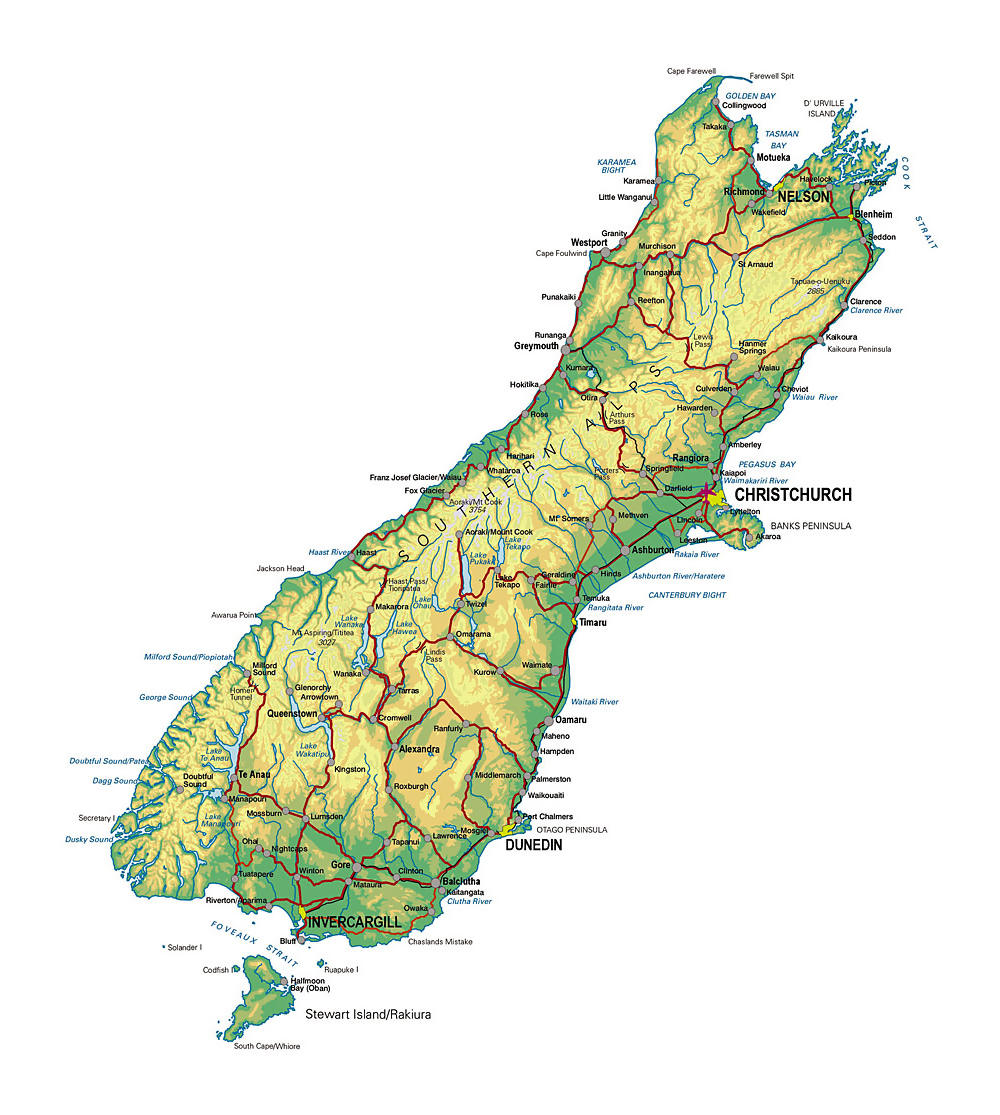
“M” is for “Muscovite Mica” from Joyce Bay, Charleston. Thirty kilometres south of Westport is the town of Charleston and its small twin bays, Constant Bay and Joyce Bay. Constant Bay was named after the ketch “Constant” whose Captain, Charles Bonner, in the mid-1860s managed to squeeze the boat into the tiny bay, bringing supplies for the town that had sprung up due to the discovery of gold.

The rocks that line the shore of these bays contain pegmatites, large veins of quartz with masses of mica in them. A pegmatite is a crystalline igneous rock containing a variety of crystals formed by slow crystallization at high temperature and pressure at depth, exhibiting large interlocking crystals.

When I visited the area in 2018, at the northern end of Joyce Bay I came across some stones from a vein that must have been almost pure mica. I chose this small boulder-sized rock to bring home, and it has sat in the lounge since, one of the very few non-tumbling stones I have kept.

There is so much mica in the rocks around Constant and Joyce Bays that the sea sparkles with it.

The two most common forms of mica are the silvery muscovite and the darker biotite. Mica minerals form large, flat sheets due to their atomic structure. Strong silicon-oxygen bonds extend outwards in two directions while the third direction only has weak bonds with large, low charge atoms in the space. One thin sheet is transparent and almost colourless, feeling like flexible plastic. Sheets of muscovite five metres by three metres have been found in Nellore, India. Technically, muscovite mica is composed of potassium aluminum silicate hydroxide fluoride. The name “muscovite” comes from Muscovy-glass, a name given to the mineral in Elizabethan England due to its use in medieval Russia (Muscovy region) as a cheaper alternative to glass in windows.

Sheets of muscovite have high heat and electrical insulating properties and are used in the manufacture of many electrical components. Muscovite sheets were used for kitchen oven windows before synthetic materials replaced them. Muscovite can form during the metamorphism of argillaceous rocks. The heat and pressure of metamorphism transforms clay minerals into tiny grains of mica which enlarge as metamorphism progresses. Small flakes of mica are often a component of a wide range of part of different rocks. For example, muscovite occurs as isolated grains in schist and gneiss, and it can be abundant enough that the rocks are called “mica schist” or “micaceous gneiss”. Jocelyn Thornton in her “Field Guide to New Zealand Geology” (2003) writes on page 103: “Hidden in the gorse-covered stretch between Charleston and Constant Bay is a pegmatite that was once mined for mica; the outcrop still contains large crystals of muscovite mica.” In “Geology of the Greymouth Area” (2002) by GNI, page 43, it is noted that “a small amount of mica was mined in 1911-12 from a pegmatite near Constant Bay, but the grade is low.”

For more on muscovite mica and its uses, see here.

“N” is for “November” in the Calendar – Each year I produce a customised wall calendar, using an online site, with stones or beaches or tumble-polishing as the theme. This is the month of November in my 2021 calendar. The month’s theme is “Stones from Leithfield Beach, Canterbury” with close-ups of four un-polished stones. One of the four stones shown here is a red and yellow jasper, collected in August 2020.

November is also usually the month in which I prepare the calendar for the following year.

For the next Post in this Series, see here. For the Series Index, see here.

National Lockdown Number Two: Stone Two

To mark Day Two of this National Lockdown, this is a tumble-polished jasper from Gemstone Beach. It is almost barrel-shaped:

Jasper is often difficult to tumble successfully as it is often a little brittle. Jasper can also have tiny cracks or holes that can be too deep to remove without making the stone too small.

This stone feels very smooth but the close-up photos reveal a number of tiny imperfections and rough spots.

Despite this, the stone also shows the complexity and beauty of this kind of jasper.

Another 11 cases of Covid-19 were identified in the community in New Zealand today, as reported at the 1 pm government news briefing. All but an aircrew member, returning from Japan, appear to be linked to the initial case identified two days ago, with all cases being in Auckland. Contact tracing and widespread testing is being undertaken. Through genomic sequencing, the source of the cluster infection has been traced to a traveler from Sydney in managed isolation.

Stone of the Day #3 is here.

“I” is for “Ichnogenus Protovirgularia” and “J” is for “(Picture) Jasper”

A Facebook Group I belong to, “New Zealand Lapidary, Rocks, Minerals, Fossils”, invited its members to submit photos each week of a stone, mineral or fossil in their collection that starts with a letter of the alphabet. The first Posts in this Series can be found here. The following are my Posts for “I” and “J”.

I” is for “Ichnogenus Protovirgularia”. This argillite stone from Gemstone Beach contains a trace fossil shape that has been identified by a trace fossil researcher as belonging to the Ichnogenus Protovirgularia.

A trace fossil is an “ichnofossil” – they are identified by their shapes (not by what made the shapes as this may not always be known). The term is derived from the Greek word “ichnites” meaning “footprint”. An “ichnogenus” is a group of trace fossils with similar characteristics (a “genus” is an intermediate category between “species” and “family”). Ichnogenus Protovirgularia are trace fossil shapes consisting of a small keel-like trail which is composed of an elevated median line and lateral wedge-shaped appendages alternating on both sides”, including lines of chevron shapes (as in this stone I found on Gemstone Beach). They were given this name in 1850 by Frederick McCoy, an influential Irish palaeontologist, who believed he was seeing the actual fossil of an ancestor of Virgularia mirabilis, the slender sea-pen, hence the term “proto-virgularia”. It was not until 1958 that the shape was identified instead as a trace fossil (and one which was made by quite a different animal).

It is thought that the trace is usually the product of locomotion (travel movement) produced by small bivalves, a burrow resulting from the rhythmic action of a muscular cleft-foot. On the southern coast, these traces are called worm-casts – it is thought that the casts were left as the worms tunnelled through mud and compacted the (excreted?) sediment behind them. It is not yet clear to me what left the trace on this Gemstone Beach stone, and I am not yet 100% convinced that this trace isn’t something other than Protovirgularia. More details on Ichnogenus Protovirgularia and trace fossil stones can be found here.

“J” is for “(Picture) Jasper” – Picture Jasper from Birdlings Flat.

Jasper is usually described as a form of cryptocrystalline silicon dioxide (quartz), as are a number of other rock types such as chalcedony, agate, carnelian, chrysoprase, chert and flint. “The Photographic Guide to Rocks & Minerals of NZ” defines “cryptocrystalline” as meaning crystals that are less than 0.001 mm in size, too tiny to see even using a hand lens. Jasper is distinguished by incorporating other materials that give it opacity (blocking the light) and colour. The Dorling Kindersley/Smithsonian book, “Rock and Gem”, states: “Brick-red to brownish-red jasper contains hematite; clay gives rise to a yellowish-white or grey, and goethite produces brown or yellow” (see scan of book page below). Names for types of jasper often refer to aspects of their structure or composition – banded, orbicular, moss, brecciated, or jasp-agate. But sometimes names relate to surface appearance and patterns – mottled, spider-web, egg pattern, and picture. Patti Polk, in her book “Collecting Rocks, Gems and Minerals”, defines picture jasper as containing “a dazzling array of colors and exquisitely detailed patterns that resemble skies, mountain vistas, desert landscapes, and forest horizons”. She also refers to “warm tones of tan, gold, yellow, blue, green, and browns all swirled together in strikingly outlined picturesque scenes”.

I found this small picture jasper on Birdlings Flat about three years ago. Its pastel tones, the contrasts between light and dark, and the way a number of small cracks and fault-lines break up the surface pattern all contribute to its desert-canyon-landscape-picture. [This stone was Stone Eight in the Lockdown Stones of the Day Series.]

For the next Post in this Alphabetical Series, see here. You can find the Index for the Series here.

“G” is for “Green Hydrogrossular Garnet” and “H” is for “Hematite Jasper”

A Facebook Group I belong to, “New Zealand Lapidary, Rocks, Minerals, Fossils”, invited its members to submit photos each week of a stone, mineral or fossil in their collection that starts with a letter of the alphabet. The first Posts in this Series can be found here. The following are my Posts for “G” and “H”.

“G” is for “Green Hydrogrossular Garnet from Gemstone Beach”. Found on Gemstone Beach (Orepuki, Southland) early in March 2020, only a couple of hundred metres from the car-park, on the edge of the Taunoa Stream. The “grossular” part of its name is derived from the Latin word for gooseberry, because of the light-green colour of many hydrogrossular stones, like this one. White and brown are two other common colours, with other hues also known.

“H” is for “Hematite Jasper” – This is a small (3 cm long) hematite brecciated jasper stone found on Gemstone Beach, Southland, in February this year, tumble-polished in April.

Jocelyn Thornton provides an example of a similar stone from the same beach (see photo below, left) on page 36 of her booklet “Gemstones” .

The following comes from my research to try to understand more about hematite jasper: Jasper is a dense opaque microcrystalline quartz (the crystals are too tiny to be seen by the naked eye). “Jasper” is derived from the Greek word for “spotted stone”, referring to its typical multicoloured, striped, spotted or flamed appearance. Jasper can form in many colours, not just the dark red we usually associate it with. Hematite is a common iron oxide compound widely found in rocks and soils. It occurs naturally in a variety of colours – black to silver-gray, brown to reddish-brown, and red colours. So it is often hematite that also causes the reds in jasper, including the segments of colour seen in brecciated jasper and the “moss” in moss jasper and the “bubbles” in orbicular/poppy jasper (www.quartzpage.de/jasper.html). Mindat has some great photos of jasper and hematite (see photo below, right).

However, it is the silver-gray hue present in jasper that we tend to call “hematite jasper”. The polishing of the stone I found brought out the silvery-gray hematite shine as well as some green (maybe epidote?). Hematite shows only a very feeble response to a magnetic field and is not noticeably attracted to a magnet.

For the next Post in this Alphabetical Series, see here. The Series Index is here.

FB Group Posts: 21, 22 & 25 June 2021 – Final Fossicks at Gemstone Beach, and a Kakanui Beach Visit

This is the sixth Post on my June 2021 stone collecting trip to the South Island, and is also the 16th Post in the Series of my daily Posts in the Facebook Group “New Zealand Lapidary, Rocks, Minerals, Fossils”. The first Post on my June trip is the Sunday 6 June entry in this Post, and the first in the Facebook Group Series is here.

Monday 21 June 2021: Featuring eight stones from (what I thought was going to be) my last visit to Gemstone Beach this trip. Cold again but sunny and very little wind, good fossicking. Here are five of the stones:

The Waimeamea River was blocked off by a build-up of stones during the last high tide so I could wander a kilometre further along the beach than previously. Here are the other three stones:

[Monday 21 June was also the day I made a Post in the Group’s Alphabetical Series – “H” is for “Hematite Jasper…”– see here.]

Tuesday 22 June 2021: Couldn’t resist the temptation to visit Gemstone Beach one more time before leaving tomorrow (despite scheduling today as clean-up and pack-up and load-up the car with stones). Bit of a cold breeze today but a big coat and hood did the trick. Found a few nice small-to-medium-sized hydrogrossular garnets (there have been very few up until today), and the usual colourful and interesting stones. Here are four of today’s finds:

Here are another four of today’s finds:

And it’s finally farewell to Gemstone Beach for this fossicking trip.

Wednesday 23 June 2021 and Thursday 24 June: Travel days, no beach visits, no posts.

Friday 25 June 2021: Spent just over three hours on Kakanui’s Seadown Beach (North Otago) today. Among my finds were these beach agates and fossil sea floor stones:

Maybe petrified wood, plus some jaspers:

And some other stones from today:

Beach scenes from today near Kakanui:

The next Post in this Series is here, which is also the last Post on my June 2012 stone collecting trip to the South Island.

FB Group Posts: 22, 23 & 24 May 2021 – Kakanui Jaspers, Agates and Quartz

This is the seventh in this Series reproducing my recent regular Posts in the Facebook Group “New Zealand Lapidary, Rocks, Minerals, Fossils”. The first Post in this Series is here.

Saturday 22 May 2021: Four small tumble-polished jaspers from a beach near Kakanui, collected in February-March this year, just out of the tumbler. 2 to 2.5 cms size. These illustrate just some of the diversity of jaspers from that beach.

Sunday 23 May 2021: Shining the light on (or through) three recently tumble-polished stones from a Kakanui Beach. Two beach agates (chalcedony) and one stained quartz.

Monday 24 May 2021: Gorgeous jasper from a Kakanui beach – 5.5 cms by 4 cms in size. Found at 12.42 pm on 19 February this year (according to the time stamp on a photo I took of it then). The stone looked astounding on the beach. (See Day Three in this Post.) After tumbling, it has taken a very good polish, not shown well in the photos.

I started it in 400 grit and gave it only a week there before putting into polish. The end product has four or five small rough areas, which could have been smoothed away with more tumbling in grit but I wanted to keep its size and character. The close-ups don’t really do it justice. The photos taken on the beach when I found it are stunning and in many ways better represent how the stone looks now.

The next Post in this Series is here.

FB Group Posts: 2, 3 & 4 May 2021 – Jasper, Breccia and Faultline Stone

Lately I have been making regular Posts in the Facebook Group I belong to, “New Zealand Lapidary, Rocks, Minerals, Fossils”. This Group, with currently just over 4,000 members, is described by its organisers as follows: “The Group is for anyone interested in rockhounding, collecting or any of the rock Lapidary arts. Its focus is on New Zealand material but anyone can contribute overseas material if you worked it here in New Zealand.” It is very useful for someone like me to have a Group that has a local focus. A number of members have expertise in different regions of the country or in different types of rocks. It is also great to get reactions to my own material and ideas, and encouragement from people who share the same passion/obsession.

Some of the Posts I have made recently in this Group are about stones that I have just finished tumble-polishing, other Posts draw on material from TumbleStone Blog, and some relate to current interests of mine. Here are three from early this month (apologies to those who have already seen them before).

Sunday 2 May 2021: Small (3 cm) jasper stone recently tumble-polished, found on Gemstone Beach, Southland, on 28 February this year. Maybe some green epidote also present.

The stone looks like what Jocelyn Thornton refers to as a hematite jasper (page 36 “Beach Pebbles – Orepuki” in “Gemstones”), because of the grey material that the dark red is embedded in. The bright specks in it seem to be the light glinting off the metallic planes. They could be small particles of polish remnants but the stone spent two days in borax after polishing. Also, checking with photos of the stone before it was tumbled, some of the bright glinting seemed to exist at that stage. However, the stone is not metallic – to my surprise, it does not respond to a magnet, so it is highly likely not to have hematite in it. [I later discovered that hematite is very weak magnetically so this stone is very likely to be a hematite jasper.]

Monday 3 May 2021: Small (3 cm) stone recently finished the tumble-polishing process. Found on Gemstone Beach, Southland, about a year ago. It appears to be a brecciated stone, made up of many tiny pieces in a fine-grained matrix.

“Breccia” consists of pieces that have not been rounded much by transport by water, for example, before being cemented together; “conglomerate” consists of more rounded pieces indicating some erosion before being cemented together and thus have travelled further before formation. The fragments may be the result of faulting (even small movements in rocks caused by pressure) or a landslide or something that causes fast erosion. Of course, some stones can consist of both sharp-edged and rounded fragments, confusing the categorisation! One of the potential “problems” with polishing such stones is that different embedded fragments may polish quite differently and some may not polish at all. This stone has polished much better than I expected, despite its complex make-up, with only a couple of tiny un-polished “dots” on one side.

Tuesday 4 May 2021: Recently tumble-polished small mudstone (3 cms long) from Gemstone Beach, Southland.

Often called a “faultline”, “faulted” or “earthquake” stone because of the displacement captured within it. I think of it as an “offset stress fracture” due to the very minor movement that has been frozen in time. Not an unusual type of stone – I have come across a few – but it does attract my attention when I see one of these. This little stone has tumble-polished well, ending up smooth and relatively shiny, though it hasn’t taken a high polish.

See here for the next Post in this Series.

Thirty New Zealand TumbleStones for the USA – Part Two: Ten from Kakanui

In Part One of this series of Posts, I explained how I received an email from Sheila in New Hampshire requesting some tumblestones that she could send to friends. I have selected 30 polished stones from three South Island beaches. Part One described the ten from Gemstone Beach. This Post describes the ten from Kakanui while the next Post describes the ten from Birdlings Flat.

Kakanui is a small town of just under 400 residents about 14 kilometres south of the city of Oamaru in North Otago in the South Island of New Zealand (see maps below). The Kakanui River and its estuary divide the township in two. There are a number of holiday homes there, especially south of the river, so the population increases particularly in summer. The Kakanui area contains a number of limestone formations which include many fossils. But it’s a small beach a couple of kilometres north of the town where I find the smooth beach stones that I tumble polish. The beach has no name, but I call it Seadown Beach after the road nearby.

The stones along this coast will have been brought down by rivers from the Southern Alps to the sea where they have been tumbled in the waves for many thousands of years.

The ten Kakanui tumblestones I sent to Sheila included quartzites and jaspers. Here are the first five stones:

Many of the stones on this beach in Kakanui are quartzites. A quartzite starts off as a quartz-rich sandstone, a sedimentary rock that is grainy and feels like sandpaper. When the sandstone is exposed to high temperatures and pressures, the hard glassy metamorphic rock of quartzite is formed. Quartzite’s wide variety of colours are a result of minor amounts of different minerals being incorporated with the quartz during the process of metamorphism.

Jasper is different from quartzite but is related, with quartz being the common denominator. Quartz is silicon dioxide (SiO2) and is the most abundant mineral found on the Earth’s surface. Jasper is an opaque form of chalcedony which is a cryptocrystalline form of silica. Chalcedony arises when quartz crystals forms at low temperatures in volcanic cavities. The crystals can be so small that they are visible only when magnified, which is the meaning of the term “cryptocrystalline”. Chalcedony comes in a vast array of colours and patterns which gives rise to a wide range of different stones. These include blood-red carnelian, wine-red jasper, brown-banded agate, green-moss agate, apple-green chrysoprase, and black and white onyx. The colour depends on what minerals seep into the rock. The presence of iron causes the red colour in jasper, but jasper can also be green, yellow and brown when other minerals are present instead.

It can often be difficult to decide whether some dark red stones are quartzite or jasper. Here are the second five Kakanui tumblestones sent to Sheila:

This YouTube video (below) is the view of the Kakanui area coast from a drone. The first part of it follows the coast southwards from Kakanui, with good views of the town just after the beginning. After 2 minutes 39 seconds, the video follows the old road which has been claimed by the sea’s eroding forces, travelling southwards towards Kakanui, finishing about a kilometre or two short of the beach that these stones come from.

The last Post in this series is on the ten tumblestones that come from further north, near Christchurch, from Birdlings Flat at the northern end of Kaitorete Spit.

End of South Island Stone Collecting Trip, May/June 2020 – Days 19 to 22

The following are the last of my personal Facebook Posts on my trip, which were also posted in the Facebook Group “New Zealand Lapidary, Rocks, Minerals, Fossils”. The first five days of my trip can be found here.

Day Nineteen, Visit to Beaches North of Kakanui – I stopped off at about four places along the stony beaches just north of Kakanui. The bright sun dried out stones and made it hard to see their colours. 

But I managed to find a few worth tumble polishing, especially quartzites and some jaspers. I didn’t see any agates.

Day Twenty, Last Visit to Kakanui Beach on This Trip – I spent four hours on the stony beach two kilometres north of Kakanui. It was 1 degree when I arrived at 10 am, and it stayed cold. Hat, scarf, gloves and a thick coat were all necessities today. Today was cloudy, which meant that nearly all the stones on the beach stayed wet! That made fossicking so much easier than yesterday. I met a local couple walking their dog and picking up rubbish (bless them!). They told me that sometimes there are very few stones on the beach, and changes can occur from day to day. But today, they said, was excellent for someone like me. I found many very nice quartzites and red jaspers and a few other kinds of stones.

I stashed my finds in three different places as I made my way about a kilometre along the beach (it felt like two or three kilometres but I checked on Google Maps). I had to make sure I could remember these places so chose very large drift wood pieces. Gathering the stashes up on the way back made the last 300 metres an effort, but it was worth it. 

Day Twenty-One, Oamaru to Christchurch – Today I stopped off at Patiti Beach (Timaru), Browns Beach (near Temuka) and Wakanui Beach (to the east of Ashburton). The kind of stones I am interested in for tumble polishing are few and far between on these beaches but an hour’s fossicking does prove productive, especially for small quartzites and jaspers. 

Patiti Beach is located right within the boundaries of the city of Timaru:

Browns Beach is on the coast east of Temuka:

Wakanui Beach is east of Ashburton:

Day Twenty-Two, Final Day Visiting Beaches, Gore Bay and Kekerengu – I’ve now clocked up over 3,000 kms, reached Ward tonight, catching the Cook Strait ferry tomorrow (if it’s not too stormy). After leaving Christchurch this morning, I stopped off at Gore Bay, just to the east of Cheviot. Lots of grey stones on the beach, with the odd dash of white or colour. An hour’s fossick yielded a few interesting stones, often a bit bashed about.

Later I stopped off on the Kaikoura coast at the beach north of Kekerengu, not far from where the road leaves the coast to head to Ward. The sun was dropping but I wanted to revisit this beach – on my way south I had found some interesting limestone stones with trace fossils in them. I collected a few more to aid my study and understanding of them. Today was a warm day, up to 20 degrees. A storm is coming.

[The storm arrived the next day, the day I crossed Cook Strait on the car ferry. A planned trip to Ward Beach in the morning was not able to take place.]

South Island Stone Collecting Trip, May/June 2020 – Days 16 to 18

The following are Facebook Posts on my trip made for family and friends, as well as for the Facebook Group “New Zealand Lapidary, Rocks, Minerals, Fossils”. The first five days of my trip can be found here.

Day Sixteen, Ninth Visit to Gemstone Beach – Since I don’t leave Riverton until tomorrow, I decided to make one more visit to Gemstone Beach this morning, 30 kilometres away. The day was so nice and I had such a productive fossick yesterday that I couldn’t resist the temptation. Ended up spending nearly four hours in the sunshine.

Not as many great finds today compared to yesterday but I picked up some nice stones for tumble polishing. 

Met a couple of people on the beach, one from Montana and another from Riverton (who said she had learned tumble polishing from my Blog!), and had interesting chats about stones. 

Day Seventeen, Henderson Bay, Riverton – Had a quick visit to the bay in Riverton where I had summer holidays when growing up. It’s the last little bay before the Back Beach. 

Cold wind this morning so I needed all my warm weather gear. The stones at Henderson Bay are similar to those at the Back Beach and, to a lesser degree, Gemstone Beach. Generally speaking, there are fewer of them and of less quality here. 

Day Eighteen, Gore to Oamaru – I drove from Gore to Oamaru and stopped off at Hampden and the beaches between the Waianakarua River mouth and Kakanui. I decided that the stones on the beach just north of Kakanui were so great that I’ll be going back there again on Sunday and Monday. Cold but sunny weather, the lack of wind and rain is appreciated.

See here for the next Post in this Series.