TS2- HYDROGROSSULAR GARNET: PHOTOS, PART TWO

Continued from HYDROGROSSULAR GARNET: PHOTOS, PART ONE

Back to HYDROGROSSULAR GARNET

HOME – FOSSICKING BEACHES – BEACH STONES – TUMBLE-POLISHING

TS2- HYDROGROSSULAR GARNET: PHOTOS, PART ONE

rptx

The following are photos of hydrogrossular garnets from Gemstone Beach, all but a handful having been found by myself over the past four or five years. Some photos are of “rough” stones, in the state as they were found on the beach, unpolished. Others are of “polished” stones, having been tumble-polished by myself. Nearly all are photographed dry, though polished stones are very similar to wet ones. (Photos of wet rough stones can be found in the Blog Posts listed at the bottom of HYDROGROSSULAR GARNET.)

Continued in HYDROGROSSULAR GARNET: PHOTOS, PART TWO

Back to HYDROGROSSULAR GARNET

HOME – FOSSICKING BEACHES – BEACH STONES – TUMBLE-POLISHING

TS2 – GEMSTONE BEACH: LOCATION ON TE WAEWAE BAY

rptx

Gemstone Beach is located on the long sweeping coast of Te Waewae Bay, Foveaux Strait, Southland (see photos above). According to Wikiwand, the Bay is 27 kms in length. It stretches from Monkey Island in the southeast (the location of a freedom camping site) to its far end (beyond the start of the Hump Ridge Track) in the northwest. Interesting stones can be found especially in the middle part of the Bay’s coast, but take care! Swimming is discouraged along most of the beach because of the power of the waves, and the cliffs backing the beach pose at least two dangers – they are prone to slumping, and can trap people when the tide is high.

There are seven main sections to the Te Waewae Bay coast, from the stone fossicker’s point of view (see photo, below left). Section One runs from Monkey Island to the small town of Orepuki near which Gemstone Beach can be found (see photos below, second from left and centre). This six and a half kilometre stretch is primarily sand. It is not until you reach Gemstone Beach that significant amounts of stones are encountered.

Section Two is a 200 metre stretch of beach in front of the Gemstone Beach carpark, running to the Taunoa Stream in the west (see photo above, second from right). The road sign on State Highway 99 that points to Gemstone Beach shows the way to the carpark. (Note that there is a sign to “The Beach” at the eastern entrance to Orepuki – if coming from that direction, you need to drive through the small town and travel another 300 metres or so before you get to the Gemstone Beach sign.) The beach right in front of the carpark sometimes contains a lot of stones but other times can be mainly sand. Interesting stones can be found here, including jasper, quartz, trace fossil stones and even, on rare occasions, hydrogrossular garnets. This is always the most crowded part of the beach. Passing motorists often stop to check out what “Gemstone Beach” looks like and they wander onto the beach without venturing very far. Most of these visitors turn back at the Taunoa Stream, if they reach it.

The Taunoa Stream itself is always worth searching – the stream’s current moves sand away from the underlying stones.

Section Three of the Te Waewae Bay coast runs from Gemstone Beach to the mouth of the Waimeamea River, a distance of about 1.5 kilometres (see photo below, far left). If you walk 300 to 400 metres to the right from the carpark, in a westerly direction, past the Taunoa Stream, the stones become more frequent on the cliff-backed beach (see this Post for some details). Then large banks of stones are encountered, running all the way to the mouth of the Waimeamea River.

This stretch of the beach is the main fossicking area for stone enthusiasts. On most of my visits, I usually spend about three hours walking from the carpark down to the Waimeamea River mouth and back. A wide range of stones, most of them smooth, are constantly moved up and down the beach by the waves. For example, although, in my experience, hydrogrossular garnets can be found anywhere between the carpark and McCracken’s Rest, there seem to be two or three areas between the Taunoa Stream and the Waimeamea River mouth where they are sometimes more frequent. See this Post for an account of the stones I found along this stretch during five winter fossicking days in 2020.

At times the Waimeamea River is blocked off from the sea by high banks of stones piled up by the powerful waves – a lagoon in behind the stones is formed, which can stretch for 500 metres, and water seeps out under and through the stones. These seepages cause shallow holes in the stone surface and they progressively eat back into the bank (see photos below). This can lead to the river breaking through to the sea. If the river is flowing across the beach, it presents a significant challenge to ford and much care must be taken. After a period of rain, the river can be too high and fast-flowing to cross. Much care needs to be taken when fossicking along the bottom of the high banks of stones in this area. Especially with an incoming tide, the rushing waves can catch you unawares and it can be difficult to escape up the bank in time.

Section Four of the Te Waewae Bay coast runs from the Waimeamea River mouth to McCracken’s Rest (see photo, below left).

McCracken’s Rest is a lookout and rest area, with information panels, perched on the edge of a cliff with commanding views of Te Waewae Bay. It is the first access point to the coast, west of Gemstone Beach, from State Highway 99. There is no formal way down to the beach but people have been known to negotiate the electric fence and steep slope, especially to go to hunt for stones.

From the Waimeamea River mouth to McCracken’s Rest is a distance of about five and a half kilometres. I have walked a kilometre or two at each end of this section but not all of it. It consists mainly of large banks of stones at the Waimeamea River end which, by the time McCracken’s Rest is reached, thins out to more sand and fewer stones. There are always stones up along the back of the beach but more sandy patches appear closer to the waves. Some of the stones are larger here than in the previous sections of the coast and maybe a little less smooth. The first part of “Visiting the Beach at McCracken’s Rest near Orepuki” is a TumbleStone post about this area and its stones. Also see the entries for “Day 11, Saturday 27 February” [2021] in this Post and “Monday 14 June 2021” in this Post for more examples of stones found near McCracken’s Rest, including quartzite, thulite, porphyry and trace fossil stones.

Section Five of the Te Waewae Bay coast runs from McCracken’s Rest to the mouth (and lagoon) of the Waiau River, again just over five and a half kilometres (see photo above, left). The Waiau River has most likely been the source of at least most of the stones that end up on Gemstone Beach. The river begins as the outflow from Lake Te Anau which itself is fed by a number of other rivers and streams, the two largest being the Eglinton and Clinton Rivers. The Upper Waiau River flows from Lake Te Anau into Lake Manapouri, 10 kilometres to the south, and from there the Lower Waiau flows further southwards for 70 kilometres before reaching Te Waewae Bay on Foveaux Strait. Water from Lake Monowai also flows into the Lower Waiau River, via the short Monowai River, about 20 kilometres south of Lake Manapouri. Lakes Te Anau, Manapouri and Monowai all originated from glacial action, being left behind as glaciers melted and receded. I have walked most of the way from McCracken’s Rest to the start of the Waiau River lagoon (Te Waewae Lagoon) (see the last half of this Post). The beach is a mix of sand and drifts of stones, with the stones lying higher up the beach than in Sections Three and Four. The stones here include many of the types that are found between Gemstone Beach and the Waimeamea River mouth but are generally fewer and of lower quality, in my experience. Fishing Camp Road turns off State Highway 99 and goes down to the Te Waewae lagoon, but there appears to be no easy access from there to the stones on the ocean-side of the lagoon.  

Section Six of the Te Waewae Bay coast runs eight and a half kilometres from the mouth (and lagoon) of the Waiau River to Bluecliffs Beach. By road, the distance is just under 30 kilometres as it is necessary to drive north to Tuatapere to cross the Waiau River by bridge. I have not walked this section of the coast, but have visited Bluecliffs Beach a couple of times. The bush-backed beach, its isolation and its more powerful waves give it a “wilder” feel. The stones on this beach are also somewhat different from those to the east of the Waiau River mouth. There is a lot of quartz and granite, and the stones, while smooth, are generally bigger. There is also a lot of sandstone with fossils in it, especially shell fossils. This has led to the beach appearing in “The Kiwi Fossil Hunter’s Handbook” by James Crampton and Marianna Terezow (2010), in the final of their 27 locations, under the title of “Te Waewae Bay”.

Bluecliffs Beach appears twice in this Post, in the comments on Stone #5, Place F (about halfway through the Post) and at the end.

From Bluecliffs Beach to the far western end of the straightish sweep of the Te Waewae Bay coast is a distance of nine kilometres. I have only ventured maybe 300 or 400 metres along this stretch so have no information on its stones.

Return to GEMSTONE BEACH

HOME – FOSSICKING BEACHES – BEACH STONES – TUMBLE-POLISHING

TS2 – GEMSTONE BEACH: MY STONE FOSSICKING

rptx

I can’t remember when I first visited Gemstone Beach. As a boy, I had spent summer holidays in nearby Riverton and knew Riverton’s beaches best. However, once I started to tumble polish stones in March 2016, I quickly became very interested in the amazing diversity of stones to be found at Gemstone Beach. I have regularly visited the beach since then, though I did not write about this in Blog Posts until 2019. The following are Posts on TumbleStone Blog describing some of those visits, listed in chronological order:

Return to GEMSTONE BEACH

HOME – FOSSICKING BEACHES – BEACH STONES – TUMBLE-POLISHING

TS2 – BIRDLINGS FLAT: MY STONE FOSSICKING

rptx

I first visited Birdlings Flat in May 2016. I have made a number of other visits since. The following are Posts on TumbleStone Blog describing those visits, listed in chronological order:

Return to BIRDLINGS FLAT

HOME – FOSSICKING BEACHES – BEACH STONES – TUMBLE-POLISHING

TS2 – BIRDLINGS FLAT: GEMSTONE & FOSSIL MUSEUM

rptx

The Birdlings Flat Gemstone and Fossil Museum is located at the end of Hillview Road at Birdlings Flat. A yellow sign is placed at the end of the road whenever the Museum is open – entry is free.

Google Maps1
Location of Museum in Birdlings Flat. Source: Google Maps.

The Museum was started in February 2003 by Vince and Colleen Burke, containing many of the polished stones he has collected off Birdlings Flat beach for a number of decades. It also contains large colourful agates, most of them collected from different parts of Canterbury, as well as many fossils. The Museum has been for sale for a while, so there is no guarantee of its continued existence.

TumbleStone Blog Posts on Birdlings Flat Gemstone and Fossil Museum:

Return to BIRDLINGS FLAT

HOME – FOSSICKING BEACHES – BEACH STONES – TUMBLE-POLISHING

TS2 – HYDROGROSSULAR GARNET

rptx

INTRODUCTION TO HYDROGROSSULAR GARNETS: Unlike the garnets we know as precious gems, hydrogrossular garnets come from dense rock masses, not crystals. Technically, hydrogrossular garnets are a calcium aluminium garnet with hydroxide partially replacing the silica found in other garnets. The first ever identification of hydrogrossular garnet in the world was in 1943 by Colin Hutton, from stones found in Nelson, and it is the most widely spread of the 13 minerals first described from New Zealand. Hydrogrossular stones (or, to be more accurate, stones that have some hydrogrossular garnet in them) often feel waxy and some are partly transparent. “Grossular” derives from the Latin word for gooseberry, referring to the light-green colour of some hydrogrossular garnets. However, other minerals get mixed in, and white and brown are two other common colours of hydrogrossular stones. Hydrogrossular stones are easily polished and make excellent pendants.

In her book “The New Zealand Rockhound” (1981), Natalie Fernandez has an entry on “Grossular Garnet” on page 50 (see photo above, left): Grossularite or hydrogrossular garnet is a massive form of calcium garnet…Colour: A wide range, patchy. Pale green, greyish, yellow, white, brown. Occasionally shades of orange, darker green, even blue and pink. Opaque to translucent. Lustre: Waxy, vitreous. [Note the treatment of hydrogrossular garnet and grossular garnet as relating to the same type of stone, something sometimes done by authors. I am not yet clear on the significance of the differences between the two.] On page 34 of “A Photographic Guide to Rocks and Minerals of New Zealand” by Nick Mortimer, Hamish Campbell and Margaret Low (2011) is an entry on “Hydrogrossular” (see middle two photos above). Its association with serpentinite is noted, and its presence in rodingite. Their entry on “Rodingite” states: “The main minerals in rodingite are calcium-bearing hydrogrossular garnet, plagioclase and actinolite.” In Thornton’s pages on “Garnet” in her booklet “Gemstones”(1985) (also available online), she refers to a hydrogrossular stone with a dark crystal of diopside in it (see photo above, right). Kirk Feral notes that hydrogrossular garnets often contain “black inclusions of Chromite”. Certainly, Gemstone Beach specimens often have dark inclusions, some black, some grey, some silvery.

Hydrogrossular garnets are probably the most sought after stones on Gemstone Beach. I often find it hard to walk past even the tiny ones, partly because they shine so brightly. To find a larger one is always a thrill. But I still have to check each possibility carefully, as some turn out to be quartz and others turn out to be argillite – the angle of the sun can make identification deceptive. Most hydrogrossular garnets have a waxy feel, and they lack the crystalline character of quartz – it takes a while to develop a feel for their subtle differences. I am grateful to those fossickers I have met on Gemstone Beach who have shared their knowledge with me, some of whom have even given me specimens they have just found. And seeing stones in museums and private collections has also been very important in helping me to spot stones on the beach.

TYPES OF HYDROGROSSULAR GARNETS: The following are the types of hydrogrossular garnets that I have come to recognise on Gemstone Beach. This is not a systematic or exhaustive classification, just a basic idea about varieties that I personally have compiled, based on my own observations. The differences will no doubt be due to the incorporation of other minerals to varying degrees. The first type is the translucent light green stone, with little or no other material in it – sometimes it can be a deeper green, maybe even a blue/green. This in many ways is the “classic” hydrogrossular.

Second are similar stones but of different hues, especially grey. Some of these translucent and partly-translucent stones have interesting cloud-like patterns in them.

The third type is the brown hydrogrossular garnet, usually opaque and very waxy, sometimes quite dark in colour, sometimes much lighter. These are my favourite type. They don’t need to be polished to be well worth displaying or wearing.

Fourth are the opaque stones of a variety of colours, white, green, grey, brown, yellow. There is quite a diversity of these, and one stone can contain a number of colours.

Fifth are the white stones with dark “intrusions”, one of the most common types. There seems to be a reasonable uniformity in the white component, though some have a blush of pink in them (maybe attributable to the mineral thulite). The dark “intrusions” do not usually take a polish.

The sixth type is what I call the “porcelain” type – an opaque stone that looks and feels like porcelain china, often having fine blue-green veins. I initially did not think this was hydrogrossular garnet. I have checked with rockhound groups online, and a number of people have identified it as including hydrogrossular garnet.

The seventh type is chalcedony-like, kind of glassy, its surface often rough and broken. It has a subtly different glassy appearance than Types 1 and 2. I initially thought this was not hydrogrossular but again have been advised by more than one source that it is.

TUMBLE POLISHING HYDROGROSSULAR GARNETS: I tend to treat them lightly, often doing only one 400 grit tumble before polishing. This leaves them shiny and reveals clearly the clouds and internal patterning. However, it leaves some holes, occasional small rough patches and lines etc. Tumbling a barrel of hydrogrossular garnets produces a very fine light-coloured slurry. I often add small hydrogrossular garnets to barrels of larger stones, to assist with the tumbling process (increasing the surfaces of contact within the barrel). I often keep one or two rough hydrogrossular garnet stones with a nice waxy feel as “touch stones”, especially the translucent green ones and the rich brown ones.

NOTE ON IDENTIFICATION: The above information about hydrogrossular garnets, and the presentation of examples of these stones from my collection, is shaped by the sources I have access to. These include a small number of published and online sources, other fossickers I’ve met on Gemstone Beach over the past five years, members of New Zealand Facebook Rockhound Groups, and specimens I have seen in museums and private collections. There are two things that have made me realise how tentative the identification of these types of stones can be. First, sometimes “hydrogrossular” and “grossular” are terms used by different people for what seem to be the same kind of stone. But, as Minerals.net suggests, “Hydrogrossular is often regarded as a variety of Grossular, but it is scientifically regarded as two distinct individual mineral species that have a slightly different chemical formula than true Grossular.” Secondly, there seems to be some disagreement even amongst “experts” over whether a stone is a hydrogrossular garnet or not. For example, in August 2020 I posted a photo of a Gemstone Beach stone online, suggesting it might be a hydrogrossular garnet but noting that I wasn’t sure. Someone in North America who had undertaken technical analysis of “hydrogrossular” garnet stones from New Zealand stated that most of them were in fact “grossular” and that my stone was most likely “grossular”. But in the same discussion thread, a geological research technician from a New Zealand university had no hesitation in stating “It’s a ‘hydrogrossular’ for sure”, as did a number of amateur rockhounds familiar with Gemstone Beach.

So the information and stones presented here are basically reflective not of reliable technical scientific analysis but of “local knowledge”, informed as best it can be by a range of sources, but ultimately tentative and fallible.

Posts on TumbleStone Blog about hydrogrossular garnet:

Other TumbleStoneTwo Pages on Hydrogrossular Garnet:

HYDROGROSSULAR GARNET: PHOTOS, PART ONE

HYDROGROSSULAR GARNET: PHOTOS, PART TWO

Return to BEACH STONES

Return to GEMSTONE BEACH: THE STONES

FOSSICKING BEACHES BEACH STONESTUMBLE-POLISHING

TS2 – GEMSTONE BEACH

rptx

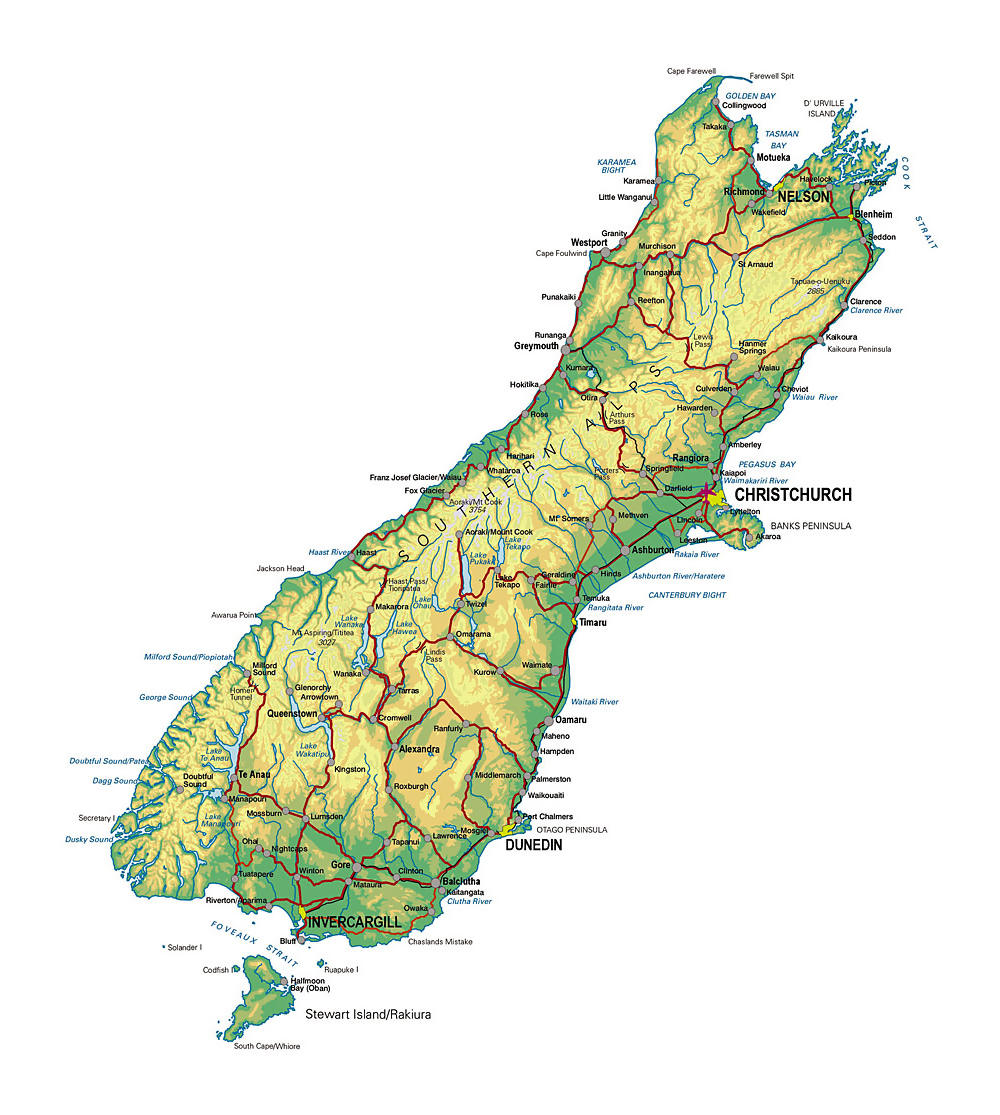
Gemstone Beach is probably the most well-known stone fossicking beach in the lower South Island, as implied by its name (which was probably bestowed upon it when tourism signs were developed for the Southern Scenic Route many years ago). The beach lies 70 kms west of Invercargill, and the mountains of eastern Fiordland can be seen from it, further to the west. The beach is on the Te Waewae Bay coast, on the shores of Foveaux Strait. The name “Gemstone Beach” most narrowly applies to a 200 to 250 metre stretch of beach in front of the carpark opposite the “Gemstone Beach” sign just west of Orepuki. However, I use the name to refer also to the beach that runs from the carpark to the mouth of the Waimeamea River, 1.5 kilometres to the northwest.

Important Posts on Gemstone Beach include the Series “Gemstone Beach and Its Stones: An Introduction for the Passing Motorist” and “Gemstone Beach: Location on Te Waewae Bay”

Other Posts on TumbleStone Blog which provide an Introduction to Gemstone Beach:

Other TumbleStoneTwo Pages on Gemstone Beach:

GEMSTONE BEACH: LOCATION ON TE WAEWAE BAY

GEMSTONE BEACH AND ITS STONES: AN INTRODUCTION FOR THE PASSING MOTORIST

GEMSTONE BEACH: MY STONE FOSSICKING

GEMSTONE BEACH: THE STONES

HOME FOSSICKING BEACHESBEACH STONESTUMBLE-POLISHINGABOUT ME

TS2 – BIRDLINGS FLAT

rptx

Birdlings Flat is a stone beach immediately south of Banks Peninsula, half-way up the east coast of the South Island. It is about 50 kilometres south of the city of Christchurch. Banks Peninsula is of volcanic origin but the Flat is located on the far eastern end of a large gravel spit called Kaitorete Spit. A good introduction is provided on GeoTrips. The beach at Birdlings Flat is perhaps the most well-known among stone fossickers in New Zealand, especially for small beach agates. But much care needs to be taken when fossicking close to the sea, the waves being strong and dangerous, especially close to the cliffs of Banks Peninsula. There are three pages (so far) on TumbleStone Two on Birdlings Flat – this one of introductory and general information, a second on the Gemstone and Fossil Museum, and a third on my stone fossicking there.

Posts on TumbleStone Blog which provide an Introduction to Birdlings Flat:

Other TumbleStoneTwo Pages on Birdlings Flat:

BIRDLINGS FLAT: GEMSTONE & FOSSIL MUSEUM

BIRDLINGS FLAT: MY STONE FOSSICKING

HOMEFOSSICKING BEACHES BEACH STONESTUMBLE-POLISHINGABOUT ME

TS2 – TUMBLE-POLISHING

00 final

Rotary tumbling is one of the main ways people polish small to medium-sized stones. Vibratory tumbling is the main alternative, being quicker though initially more expensive. Rotary tumblers will smooth and round stones while a vibratory tumbler will polish them in their existing shape. See here and here for more detailed comparisons of the two methods. I use rotary tumble-polishers and have no experience with vibratory ones.

One of the reasons I started TumbleStone Blog in 2016 was the lack of New Zealand-based information on tumble-polishing and, in fact, the existence of very few practical and detailed online sources at all. I hoped to use my experiences to help other beginning tumble polishers.

In November 2017, I started a series of detailed and well-illustrated Posts on TumbleStone Blog called “The Seven Stages in Tumble Polishing Stones”. It went through, step-by-step, the various stages involved in collecting and polishing beach stones using a tumbler with a 4lb barrel. The first Post in the Series is here, while a summary can be found as #2 in “Six Past TumbleStone Posts of Interest to Beginning Tumble Polishers”. However, changes in late 2020 in the grits and polish stocked by my supplier mean that now only six stages are required instead of seven, and a couple of other minor changes have occurred. The original seven stages included: Stage 1 = Stone Collection (not usually included in accounts of tumble polishing); Stage 2 = tumbling in 100 mesh silicon carbide grit; Stage 3 = 220 silicon carbide grit; Stage 4 = 320 silicon carbide grit; Stage 5 = using a tin oxide “Pre-Polish” powder; Stage 6 = tin oxide “Pro-Polish” powder; Stage 7 = a “burnishing” tumble for a week in borax. The change to six stages is set out here.

A two-part series of TumbleStone Blog Posts that appears to have also proved useful for beginners is “What Do I Need to Start Tumble Polishing Stones Myself? And What Will It Cost Me?” Part One covers: The Tumbler; The Siting of the Tumbler; Silicon Carbide Grit; Grit Storage and Tablespoon Measuring; and Disposal of Slurry. Part Two covers: Tin Oxide Polish Powder; Polish Powder Storage and Mixing; Plastic Beads and Bead Storage; Soap for Cleaning and Burnishing; Sieves and Buckets; and Miscellaneous Useful Items. The original series was written in April 2018 but was up-dated in March 2022. Details about the changes requiring the up-dating can be found here.

Four other good New Zealand-based sources for tumble-polishing are the Facebook Group “New Zealand Lapidary, Rocks, Minerals, Fossils”, Nicola Gray, Chrissy Lampitt and Gordon Sherwood. More about these four below.

“New Zealand Lapidary, Rocks, Minerals, Fossils” is a “private group” on Facebook, meaning you need to join to see what is posted there and to contribute. The Group is described as follows: This group is for anyone interested in rockhounding, collecting or any of the rock Lapidary arts. It’s focus is on New Zealand material but anyone can contribute overseas material if you worked it here in New Zealand. Also any New Zealanders can contribute pictures of their rock collecting trips in New Zealand or abroad. Selling is not permitted on this forum. The Group was started in 2019 and in June 2022, when I first wrote this Page, it had 5,807 members, growing to 11,624 members in May 2025. It is very active, with daily postings and much interesting material. I have been a member since May 2020.

Nicola Gray, who lives in Hastings, Hawkes Bay, has a Facebook Page, New Zealand Rock Hound, My Rock Tumbling Journey, and a series of YouTube videos. Her posts and videos document many of the details of fossicking and tumble-polishing, as well as stone cutting. She simply states: I live in New Zealand. I love rock hunting, and especially love sharing my finds with others.

Chrissy Lampitt, from Papatotara, near Tuatapere on the south coast of the South Island, writes a regular blog called “Tumble and Polish”. She often fossicks at Gemstone Beach and polishes beach stones. She has both rotary and vibratory polishers. Her blog has lots of detailed Posts about her polishing, such as the series “How I Use my Lortone Tumblers (Step-By-Step)”. Chrissy’s practical advice is well worth knowing.

Gordon Sherwood’s “New Zealand Rocks Downunder” has a Facebook Blog and a series of YouTube videos. He introduces himself as follows: I live in the Bay of Plenty, a volcanic area so that means young rocks and have to travel to other areas for older rocks that contain interesting specimens. You can expect to accompany me as I find fossils, and uncover some of the interesting insect life here in New Zealand. Look out for my attempts at cutting and carving the rocks that I have found as I get the gear together to do it. I own a local retail business here in Kawerau that has been serving our local community since 2003… Our retail shop has a great selection of crystals and gemstones that fuels this passion to fossick. In May 2022, Gordon and his wife Beth relocated their shop to Edgecumbe.

Other Posts on TumbleStone Blog about tumble-polishing:

HOMEFOSSICKING BEACHESBEACH STONES LIST OF CONTENTS TO DATE