TS2 – GEMSTONE BEACH AND ITS STONES: AN INTRODUCTION FOR THE PASSING MOTORIST – PART FOUR, BRIEF INTRODUCTION TO GEOLOGICAL TERMS FOR STONES

00 final

TS2 – GEMSTONE BEACH AND ITS STONES: AN INTRODUCTION FOR THE PASSING MOTORIST – PART THREE, SOURCES OF INFORMATION & WHAT IS A GEMSTONE

00 final

This Series of Posts provide an introduction to Gemstone Beach (Orepuki, Southland, New Zealand) and a basic guide to many of the stones commonly found on that beach. Part One presented the location and geographical context for Gemstone Beach, and described its carpark and local beach warnings. Part Two set out the main features of Gemstone Beach, including its two streams, and noted different beach conditions. This Post provides a general introduction to the stones of the beach, referring to some already existing sources of information, and discusses the meaning of “gemstone”. Part Four provides some brief definitions of important geological terms useful in the later Posts that describe individual types of stones in detail.

WHAT STONES CAN BE FOUND ON GEMSTONE BEACH?

There used to be a Heritage Trails sign at Gemstone Beach which informed about the gemstones that can be found there (photo above, left). It noted, “Some of the ‘gems’ to be found [on this beach] are: Hydrogrossular, Jasper, Garnet Sands, Rodingite, Epidote, Fossil Worm Casts, Idocrase, Sapphire.” A photo of “hydrogrossular stone samples” was provided on the sign. But the sign didn’t really help an interested passerby to identify any of the stones mentioned. And the missing sign has not been replaced.  

TWO SOURCES OF INFORMATION ON THE STONES THAT CAN BE FOUND ON GEMSTONE BEACH

Te Hikoi, the Riverton Aparima Museum, has a display on the geology of the region which includes a lot of useful information on Gemstone Beach (see the section on “Discovery Depot” on this page). On one of my visits to the museum, I was given permission to photograph parts of the geology display, including specimens of stones in drawers and bowls of stone types associated with a rockhounding hunt set up as a holiday activity for children. The photos were taken indoors without a flash, and some of the stones were behind glass so their quality is not always the best. Nevertheless, some of these photos will be included in later Posts. The museum also sells a laminated photographic poster of “Sample Stones” from Gemstone Beach. I have one of A4 size, 30 cm by 21 cm (see photos below, left). This is a useful resource, and can be taken onto the beach if you want. However, the photos are relatively small and far from sharp, not showing key details such as the traces in the “Fossil Worm Castings”. It is also difficult to distinguish, for example, between what seem to be similar stones labeled “Porphyry”, “Spotted Argillite” and “Altered Volcanic & Filled Bubbles”. Some of the stone types need further explanation, such as “Conglomerate”, “Breccia” and “Fossil Worm Castings”. It is also difficult to see how “Orbicular Jasper” differs from “Jasper” generally. And “Hydro Grossular” in the bottom righthand corner is actually a part of the larger group “Garnets”, which again is not clear.

Another source of information about the stones on Gemstone Beach is a booklet published in 1985. It covers different kinds of stones that can be found in different parts of New Zealand. “Gemstones” was written by the geologist Jocelyn Thornton, aimed mainly at the beach stone fossicker and lapidarist (cutter and polisher of stones). Although it can now be found only occasionally for sale as a second-hand book, it is available online in pdf format – see here.

In her entry on “Beach Pebbles – Orepuki” (page 36 of the pdf file online, also see photos above), she has a photo of a group of Gemstone Beach stones – they include grossular garnet, granite, gabbro, altered volcanic rock with infilled bubbles, rocks with worm trails and epidote, conglomerates, and orbicular jasper with metallic hematite. This is a very useful though again limited guide. The selection of stones is necessarily narrow, given the size of the book. However, note that Thornton’s publication also includes other pages on specific types of stones found widely in New Zealand, such as quartz, chalcedony, petrified wood and jasper.

WHAT IS A “GEMSTONE”?

The name “Gemstone Beach” implies that “gemstones” can be found there. The missing Heritage Trails sign refers to “gems”. Thornton’s (1985) book is titled “Gemstones”, and this term is often used in book titles .

But “gemstone” and “gem” can be misleading terms. According to dictionaries, a “gemstone” is a stone that, usually in cut and polished form, can be used to make jewelry. This means that not all stones are gemstones – stones that are unattractive and soft or brittle, for instance, would not qualify as gemstones. Wikipedia outlines the difference between “precious” and “semi-precious” gemstones: “The [traditional] precious stones are emerald, ruby, sapphire and diamond, with all other gemstones being semi-precious.” This distinction has some problems, in that some semi-precious gemstones can be more expensive than some precious gemstones – it depends on their quality and rarity. [I found this YouTube clip useful in thinking about stones and gemstones – “PRECIOUS Gemstones vs. SEMI-PRECIOUS Gemstones: What do they mean?”]

A person who lived near Gemstone Beach as a child once told me that locals referred to the beach as the “jewelry box” because of the many pretty stones to be found there. But when you first go to Gemstone Beach and walk along it, looking at its stones, there doesn’t appear to be gemstones of any kind. The dry stones on the beach are unremarkable in appearance, maybe a dull grey in colour. It is only when they are viewed wet and at close quarters can it be seen that many of the stones could come into the category of “semi-precious gemstones” because of their colours and patterns. But note that their monetary value is nothing or negligible – even if polished and made into jewelry, they are not worth much. Polishing requires machinery, time, expense and patience, and jewelry-making into pendants, bracelets, earrings and rings requires expertise and the right equipment.

The following Posts in this Series will focus on the ordinary but often pretty stones from Gemstone Beach, the kind that the passing motorist can find if a little time and effort is expended.

Note: In June 2025, an application was lodged with NZ Petroleum and Minerals to mine gemstones, garnets and quartz from Gemstone Beach. When it became known, there was considerable public reaction to the possibility of the exclusion of other people fossicking for stones and to possible environmental damage. The application was eventually withdrawn in November 2025. The details can be find in the six-part series “What is Known About a Mining Application to Remove Gemstones from Gemstone Beach?” .

FOUR TYPES OF VALUABLE STONES?

There are maybe four types of stones that could be found on Gemstone Beach that have some value, more than even a pretty stone that can be polished for jewelry. However, to all intents and purposes these can’t or won’t be found easily, if at all, especially by the passing motorist.

GOLD – The Orepuki area was historically a gold mining area and some gold mining is still going on nearby. Gold can be found in the black sand of the beach but it is very fine (no nuggets) and there is a gold mining claim currently held on the beach, being worked on a very small scale. The very fine gold needs specialist equipment to find it, and it can be found only in certain places. GARNET SAND – Tiny dark red garnet crystals, almost like sand, have been found on the beach but they are impossible to spot by eye. Again, special equipment is needed, and they can’t be found just anywhere. SAPPHIRE – Over the years, a handful of stones with some blue in them have been found that are thought could be sapphire. But these “sapphires” are very rough, very plain and not of gem quality. The Riveron Aparima Museum has three examples in its collection (see photo above). GREENSTONE (SEMI-NEPHRITE) – Semi-nephrite is a very low-grade form of nephrite, nephrite being the most common type of pounamu (greenstone) (Te Papa Museum). Semi-nephrite is a structurally weak stone compared to high-grade nephrite so is generally not of much interest to artisans. I have personally not seen any on Gemstone Beach and know so far of only one possible find.

SEE THE STONES WHEN THEY ARE WET!

As I mentioned above, when the stones are dry, they look dull and often grayish. You can’t see the patterns and colours well. You need to see the stones when they are wet.

If you don’t arrive at the beach just after a rain shower, with the stones all wet, then you need to do at least one of the following: a) walk along the edge of the waves as they sweep in then out, wetting the section of stones running parallel to the waves – but watch out if you are wearing shoes to avoid getting them wet; b) look at the stones in one or both of the streams; c) sometimes there are pools on the beach with wet stones on the bottom; d) take a handful of dry stones to water to wet them, either to one of the streams or to the sea’s edge; or e) take a bottle of water, or a bucket, to pour water onto dry stones. And look at each stone carefully, turning it over as each side may be different.

The next Post in this Series is “Brief Introduction to Geological Terms for Stones”.

Go to GEMSTONE BEACH AND ITS STONES: AN INTRODUCTION FOR THE PASSING MOTORIST – PART ONE, LOCATION AND CARPARK

Return to GEMSTONE BEACH

HOME – FOSSICKING BEACHES – BEACH STONES – TUMBLE-POLISHING

TS2 – GEMSTONE BEACH AND ITS STONES: AN INTRODUCTION FOR THE PASSING MOTORIST – PART TWO, MAIN FEATURES OF THE BEACH

00 final

This Series of Posts provide an introduction to Gemstone Beach (Orepuki, Southland, New Zealand) and a basic guide to many of the stones commonly found on that beach. Part One presented the location and geographical context for Gemstone Beach, and described its carpark and local beach warnings. This Part sets out the main features of Gemstone Beach. Part Three will refer to some already existing sources of information on Gemstone Beach stones, and will discuss the meaning of “gemstone”. Part Four provides some brief definitions of important geological terms useful in the later Posts that describe individual types of stones in detail.

WHAT YOU SEE WHEN WALKING ONTO GEMSTONE BEACH

There are a couple of small tracks from the carpark to the top of a bank overlooking the beach. A short but steep path, slippery in the wet, then goes down onto the beach. To the left is a small unnamed stream, about 25 metres away (see photos below) – it nearly always flows straight across the beach and is very shallow. The cliff-backed beach continues in that direction (which is really southwards) in a long sweeping curve towards Monkey Island about three kilometres away. There tends to be fewer and fewer stones as you move along this stretch southwards beyond the unnamed stream. NOTE: Occasionally the sea covers the stones with sand – but walking north and crossing the Taunoa Stream will take you to stones.

To the right in front of the carpark is a stretch of sand that leads towards the Taunoa Stream which flows onto the beach about 150 metres away – sometimes this stream can flow across the beach right in front of the carpark (as described further below), and after rain it can be difficult to ford. See the photos below of this stretch of beach. Beyond the Taunoa Stream, the stones tend to increase significantly in number, all the way northwards along to the mouth of the Waiau River some 12 kilometres in the distance. It is the 200 metre area between the two streams that strictly constitutes Gemstone Beach.

Do not drive your car onto the beach. The sand and gravel is often soft and I have seen a number of vehicles bogged down. If a vehicle gets stuck, there is a risk the tide can come in and engulf it. It can take time to find assistance. Quad bikes can sometimes be seen on the beach – they are (usually) able to cope with the terrain.

MAIN FEATURES OF GEMSTONE BEACH

The two streams define the boundaries of the beach, though it is easy to ford the unnamed stream to the left of the carpark, and the more adventurous will usually be able to ford the Taunoa Stream (to the right of the carpark) if footwear is taken off and trousers rolled up. There is a cliff near the Taunoa Stream, behind which is an old cottage which can be glimpsed from the beach (see photos below).

The Taunoa Stream varies significantly with regards to volume of water flow, depth and course (see photos below). At times it will meander across the beach up towards the carpark, and it can also create high banks in the sand and gravel over two metres in height.

In August 2023, Gordon Sherwood’s YouTube Channel, New Zealand Rocks Downunder, posted a video of Gordon’s visit to Gemstone Beach – you can get a good idea of the road to the beach, the entry onto the beach, and what the stones and sand look like here.

A Heritage Trails sign that used to stand at the beach stated: “Storms keep the beach in a constant change, one day stones are piled high, the next tide will sweep it to sand again.” The beach between the two streams often has a lot of stones across it, but sometimes many of the stones can be buried in sand. Stones can more often be found closer to the waves rather than further up the beach, and more often at the Taunoa Stream end. Stones are exposed on the beds of both streams, as the current runs over them and washes the sand away, and so the stone-hunter will always find stones there. The occasional pool on the beach also has a bed of stones when the nearby area might only be sand.

The waves washing up onto the beach can be deceptive – they are often more powerful than they appear, and they can sweep further up the beach than expected, partly due to the gentle slope. At the highest of high tides, waves can sweep right up to the foot of the cliffs near the Taunoa Stream, and even prevent people from walking down onto the beach in front of the carpark. The best time to look for stones is when the tide is going out. This minimises the chances of being surprised by a bigger wave or being trapped against a cliff.

Beach conditions can vary significantly with the weather. Driftwood can often be found high up the beach, with more than usual being there after a storm. Rough weather can also create sea foam which can be blown by the wind onto the beach. Two good examples of a stormy Gemstone Beach are “What a Difference a Storm Makes”, a Post from Chrissy Lampitt’s “Tumble and Polish” Blog, and “Rock hounding in a Storm”, a Youtube Video by Nicola Gray.

The third Post in this Series reviews a couple of sources of information on Gemstone Beach stones and defines precious and semi-precious gemstones. Later Posts will look in more detail at different types of stones.

Go to GEMSTONE BEACH AND ITS STONES: AN INTRODUCTION FOR THE PASSING MOTORIST – PART THREE, SOURCES OF INFORMATION & WHAT IS A GEMSTONE

Go to GEMSTONE BEACH AND ITS STONES: AN INTRODUCTION FOR THE PASSING MOTORIST – PART ONE, LOCATION AND CARPARK

Return to GEMSTONE BEACH

HOME – FOSSICKING BEACHES – BEACH STONES – TUMBLE-POLISHING

TS2 – GEMSTONE BEACH AND ITS STONES: AN INTRODUCTION FOR THE PASSING MOTORIST – PART ONE, LOCATION AND CARPARK

00 final

This Series of Posts provide an introduction to Gemstone Beach (Orepuki, Southland, New Zealand) and a basic guide to many of the stones commonly found on that beach. This first Part presents the location and geographical context for Gemstone Beach, and describes its carpark and local beach warnings. Part Two sets out the main features of Gemstone Beach. Part Three will refer to some already existing sources of information on Gemstone Beach stones, and will discuss the meaning of “gemstone”.  Part Four provides some brief definitions of important geological terms useful in the later Posts that describe individual types of stones in detail. Part Five looks at different types of translucent stones that can be found on Gemstone Beach. Part Six is a Series of Posts on opaque white stones. The Part Seven Posts are on green coloured stones. [More to come.]

WHERE IS GEMSTONE BEACH?

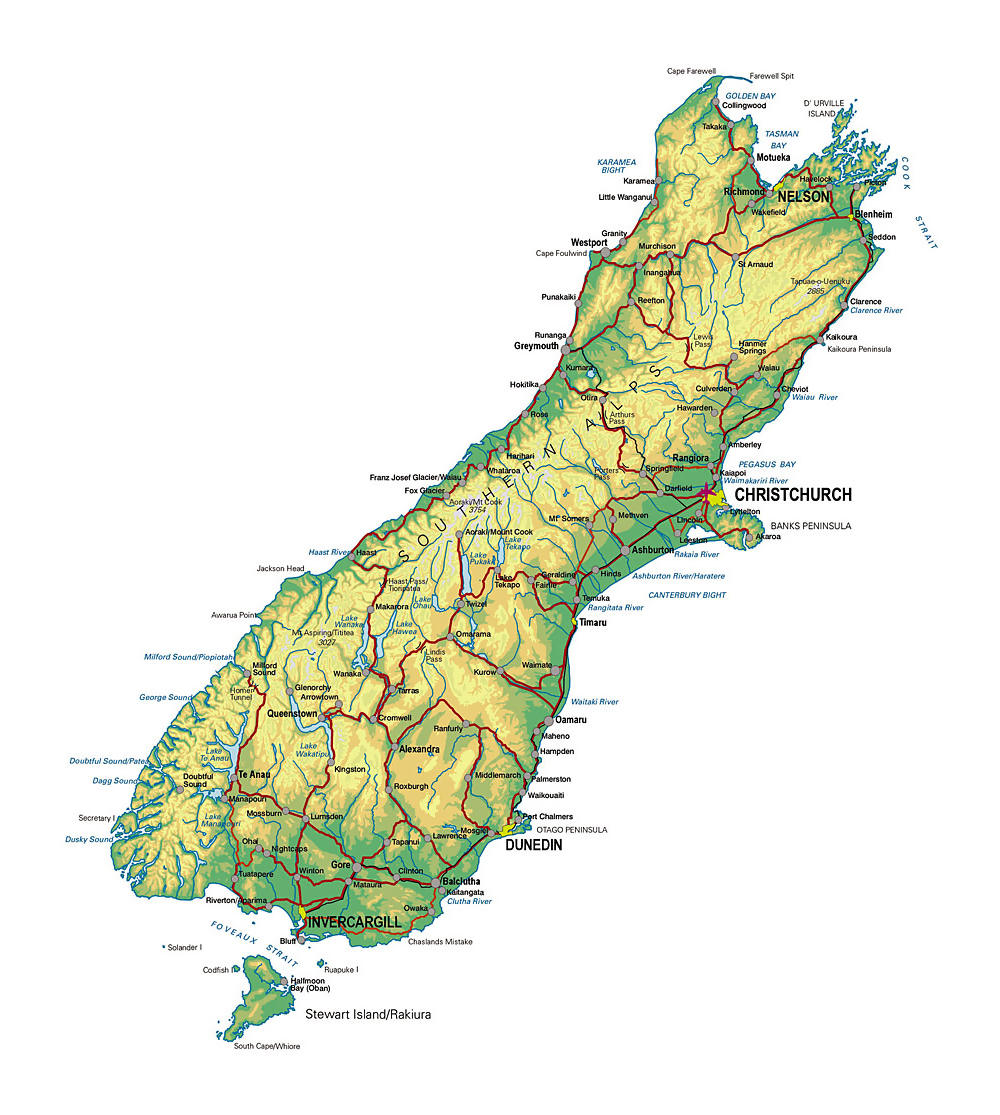
Gemstone Beach lies on the Southern Scenic Route between Dunedin and Queenstown. The middle section of this Route, between Invercargill and Te Anau in Southland, is a drive of 200 kilometres, and Orepuki’s Gemstone Beach is located about one-third along it.

Orepuki is a small coastal country village of about 60 residents, situated 70 kilometres west of the city of Invercargill and 20 kilometres east of the small town of Tuatapere, at the foot of the Longwood Range. It lies on Te Waewae Bay, a long sweeping bay some 27 kilometres long – see Orepuki – Much more than just a place to just pass through. When you drive out of Orepuki heading north along Highway 99, you encounter the sign for “Gemstone Beach” after about 600 metres. The beach carpark is less than 100 metres down that gravel road. NOTE: When coming from Orepuki, about 20 metres before the “Gemstone Beach” sign is a small gravel road signposted in a blue road sign as “Mullens Road West” which can also be taken to get to Gemstone Beach.

WARNING FOR DRIVERS: There is a three to four kilometres stretch of State Highway 99 between Colac Bay and Round Hill Road that is very bumpy, with a number of sudden dips and rises (see below). This stretch of road is from 14 to 17 kilometres from Gemstone Beach. It is best to drive it at a speed of around 80 to 90 kilometres per hour. The two largest of the rises, 200 metres east of Round Hill Road (and 14 kilometres from Gemstone Beach), will throw a vehicle airborne if taken too fast. Campervans and caravans especially should slow down to avoid breakages of crockery etc. The danger is not well sign-posted, with just innocuous “bumpy road” signs west of Colac Bay. The segment of road is on Google Maps here.

WHY AM I WRITING THIS?

I have visited this beach a number of times over the past six years, looking for stones to tumble polish. I collect smooth colourful stones with interesting colours and patterns between the size of about 2 cm and 6 cm. I have also learned a bit about what types of stones these might be, from books and the internet, and from other stone collectors. But the passing motorist is often on the beach once for only a few minutes, maybe half an hour, longer if the weather is fine and the children or dog are having a good time. The name “Gemstone Beach” tends to raise expectations but the stones look fairly ordinary. Where are the precious stones? Can I find something valuable? What do they look like? Nearly everyone becomes confused then disappointed when they fail to spot anything that looks like a “gemstone”. The aim of this Series of Posts is to highlight the beauty of Gemstone Beach’s “ordinary stones” so that “passing motorists” can begin to appreciate what they see.

THE GEMSTONE BEACH CARPARK

The Gemstone Beach Carpark is an informal one – there are no designated parking areas. People tend to park at the front, facing the beach, and then along the sides of the carpark and gravel road, if necessary. Make sure you avoid parking in front of any access gates to properties, especially the one to the right at the front of the carpark (see photo below). There are a number of signs at the front of the carpark advising the following: “No Swimming”, “Beware, Crumbling Cliffs”, No Camping”, and “No Toilets, Toilets available at the Orepuki Hall”. The Orepuki Hall is just over a kilometre away – turn off Highway 99 into Dover Street then right into Oldham Street – the Hall and public toilets are about 100 metres down Oldham Street. Across the road is an information kiosk featuring the history and geography of the area (see photos below).

Go to GEMSTONE BEACH AND ITS STONES: AN INTRODUCTION FOR THE PASSING MOTORIST – PART TWO, MAIN FEATURES OF THE BEACH

Return to GEMSTONE BEACH

HOME – FOSSICKING BEACHES – BEACH STONES – TUMBLE-POLISHING

TS2 – MY THOUGHTS ON SAFETY ON THE BEACH, AND FOSSICKING ETIQUETTE

00 final

NOTE: The following are initial thoughts only. I will develop them more as time goes on.

MY THOUGHTS ON SAFTEY ON THE BEACH: Make sure you know what the tides are doing, and always assess the implications of the tide coming in – will it trap you against a bank of stones or a cliff? Check the weather forecast before going out, and dress appropriately. Take food and water if you are going to be fossicking for more than an hour or so. If by yourself, let someone else know when you arrive and leave the beach. Always look up from the stones from time to time so you know what is going on around you. Keep an eye out for seals on the beach, and give them plenty of space. When weighing up the risk of picking up an interesting stone in the face of a powerful incoming wave, leave the stone where it is – don’t risk being dragged out. Don’t try to lift or carry too many stones – make an extra trip if need be.

MY THOUGHTS ON FOSSICKING ETIQUETTE: Only venture onto private property with the permission of the landowner. Avoid disturbing livestock. Leave no litter, and pick up other people’s rubbish if you are able. Take only the stones that you want, be selective. Give other fossickers plenty of space. If you dig a hole, fill it in afterwards. If you find a fossil, consider whether you should report it to a museum. Share your knowledge with other fossickers, especially newbies. Minimise your disturbance of wildlife, especially nesting birds.

THE ETHICS OF FOSSIL COLLECTION: In October 2022, a small group of fossil collectors cut out and removed a 23 million year old whale fossil from the bank of a West Coast river. The fossil was well-known in the area and was often visited by the public. Many people and groups were shocked at its removal, and those who did it appeared to do so in a deceitful and aggressive manner – see, for example, this news article and this news article. While private fossil collectors are important for the identification of fossils in New Zealand, there appears to be no legal protection for fossils, and the ethical issues surrounding fossil collection are not always clear. This article by Nic Rawlence, a Senior Lecturer in Ancient DNA at the University of Otago, provides a good discussion of these issues.

Return to FOSSICKING BEACHES 

HOME – BEACH STONES – TUMBLE-POLISHING

TS2 – TIMARU SOUTH: MY STONE FOSSICKING

00 final

It was in June 2021 that I first visited Timaru South beach, at the Scarborough Road end, on my way south on a South Island fossicking trip. On my way back north, I stopped off at the Ellis Road end of the beach, on a foggy South Canterbury day. The following are Posts on TumbleStone Blog describing my visits to the beach to date, listed in chronological order:

Return to TIMARU SOUTH

HOME – FOSSICKING BEACHES – BEACH STONES – TUMBLE-POLISHING

TS2 – TIMARU SOUTH

00 final

I had heard about people fossicking on Timaru beaches, and Patiti Point had been mentioned. I couldn’t find any reference to Timaru in any of the few sources I had about fossicking in New Zealand. So in June 2020, when passing through Timaru, I set out to find the Patiti Point beach and take a look for myself. A short fossick turned up a few interesting stones but I felt they were few and far between and not always as smooth as I would have preferred (see Day 21 in this Post). Over the following year I saw some Posts of interesting Timaru area stones on the Facebook Group “New Zealand Lapidary, Rocks, Minerals, Fossils”, and someone mentioned Scarborough Road beach. I made my first visit to that area, a kilometre or so to the south of Patiti Point, on 5 June 2021, and found some stones that I really liked. Among the quartzites to be found here are some really nice green ones. Among the jaspers are some gorgeous hematites, and I have also found petrified wood. So far (up until February 2025), I have visited that Timaru South stretch of beach ten times. Note that beaches often change with each tide so some of the details of the beach and its stones in the description below may no longer be the same.

What I call Timaru South is a stretch of stony beach that starts near Redruth Park, just under one kilometre south of Patiti Point, and runs southwards a further four and a half kilometres or so, past the Jack’s Point lighthouse to the Ellis Road Beach carpark (see the two maps below left).

Along the northern part of this beach, from just south of Timaru to Mutu Mutu Point, the waves require significant alertness on the part of the fossicker as they break closer to shore than at the other beaches I tend to visit. There is little time between the sound of the breaking wave and its swift movement up the beach, because of the steep (if short) slope. Fossickers focus visually on stones, keeping an ear out for waves, and we often walk along the waves’ edge, making us vulnerable to wet legs from late breaking waves. Another safety issue relates to the cliffs along the back of much of the beach. These cliffs are steep, slippery and too high to climb should the high tide press a fossicker against them. It is best to avoid high tide for most of the southern three-quarters of the beach.

The most northern part of the Timaru South beach can be accessed from where Scarborough Road meets The Parade. Scarborough Road turns off State Highway One about one kilometre south of Timaru. The southern part of the beach is also accessible from the end of Ellis Road, a further kilometre or so south from the Scarborough Road turnoff. I usually park at the intersection of Scarborough Road and The Parade. On Google Maps, this is called “Jacks Point Surfspot” (see photo above, second from right). From here, you can walk across the railway onto the beginning of the Jack’s Point/Tuhawaiki Point Walkway. The walkway runs south atop the cliffs above the southern section of the beach, ending up at the Ellis Road Beach carpark, a 45 minutes walk. About 100 metres after crossing the railway, you can slip down onto the beach at the point where the track is closest to the beach and dips the lowest (see photos below).

Once on the beach, you can go either left (north) or right (south). To the left takes you towards Timaru, past the remains of an old wharf. A large bank of rocks has recently been constructed at the back of the beach, starting near the old wharf, to protect the likes of the railway line from coastal erosion. I have not yet fossicked much past the wharf.

At the beach entry, to the right takes you initially to what is marked on the topo map as Mutu Mutu Point, just under 300 metres away. Here you get waves coming from two directions and a small surf break. It is about 1,200 metres from Mutu Mutu Point to the lighthouse, and another 400 metres to the Ellis Road Beach carpark. There are usually lots of stones right along the beach from the entry point to Mutu Mutu Point.

North of Mutu Mutu Point, large patches of sand also appear across the beach and at times the stones can be scattered more thinly. The beach widens out as you move south and in a couple of places the cliffs disappear. I have twice encountered seals along this stretch. You can catch a glimpse of the lighthouse above you, and eventually you will reach the Ellis Road Beach carpark. The day I visited there in late June 2021 was foggy, as you can see in some of the photos below. I have fossicked a little south of the Ellis Road Beach carpark, and I found scatterings of stones to continue there. Note that the last part of Ellis Road to the carpark is gravel.

A YouTube video that has drone footage of the Timaru South beach from the Scarborough Road/Parade intersection to beyond the lighthouse is here.

Other TumbleStoneTwo Page on Timaru South Beach:

TIMARU SOUTH: MY STONE FOSSICKING

HOME – FOSSICKING BEACHES – BEACH STONES – TUMBLE-POLISHINGABOUT ME

TS2 – WARD BEACH: MY STONE FOSSICKING

rptx

I first drove out to Ward Beach in August 2020. Since then, I have visited it from time to time during my South Island fossicking trips, often during the journey back north. The following are Posts on TumbleStone Blog describing my visits to date, listed in chronological order:

Return to WARD BEACH

HOME – FOSSICKING BEACHES – BEACH STONES – TUMBLE-POLISHING

TS2 – WARD BEACH

00 final

Ward Beach is about six kilometres off the main road east from the small village of Ward in Marlborough. Ward is 82 kilometres north of Kaikoura and 45 kilometres south of Blenheim. I often stay at the Flaxbourne Motel in Ward on my fossicking trips to Southland as it is about an hour’s drive from the Picton ferry. However, it was not until August 2020 that I took the side trip to Ward Beach. In her book “The New Zealand Rockhound” (1981), Natalie Fernandez notes on page 113 that “flint, jasper, agate and fossil sponge” can be found here. I particularly look for stones of fine-grained limestone with zoophycos (trace fossils) which look quite soft so I haven’t tried to tumble polish them. In fact, I have not tumbled any Ward Beach stones to date, mainly because I have been focusing on stones from other beaches.

Ward Beach is set among spectacular scenery – high hills with steep slopes and a coastline with interesting rock formations. Driving from Ward to Ward Beach, there is a railway crossing with no bells/lights, a couple of one-way bridges, and a cattle-stop which you need to drive over very slowly.

The last two kilometres out to the beach is on gravel road through a small valley, with the Flaxbourne River alongside. The river reaches the coast just south of the carpark. The 368 metres high Weld Cone dominates the landscape to the south. The Ward Beach boulders (dolomite concretions that are 65 million years old) are 800 metres north of the carpark, maybe 10 minutes’ walk away. The beach was uplifted about two and a half metres by the 2016 Kaikoura earthquake, unveiling the boulders. See here for a good introduction to Ward Beach on the RV Explorer website, and here for a YouTube video of Ward Beach by a caravanner on holiday there. A YouTube video with drone footage of Ward Beach is here.

The main features of Ward Beach to the north of the Flaxbourne River are indicated on the map above (far left). Up behind the carpark is the Chancet Park overnight parking area, set up for members of the NZ Motor Caravanners Association, but also available to anyone with a self-contained van. A public toilet is also behind the carpark. The Flaxbourne River mouth is to the south of the carpark (see photos below) – I have fossicked up the river a way, there being stones on the riverbed and along the margins. North of the mouth is the main beach, in front of the carpark, another good place for fossicking. At low tide, the beach can be partly sandy, the stones mainly being higher up. The slope here can be steep, and powerful incoming waves can be dangerous.

Just north of here is a stretch dominated by rock platforms, though some small pockets of stones exist. The Ward Beach boulders are about halfway along this rocky part of the shore.

Beyond that, there is a sweeping stretch of beach that is sandy and stony, with the stones mainly at or above the high tide line (see photo above, lower row, second from left). A lot of the stones are quite small. After a small bay, some rocks run out from the shore, home to a fur seal colony. Just a few metres from here are the Chancet Rocks, a limestone outcrop. This area is a scientific reserve.

The Ward Beach page on Marlborough Online highlights the significance of the reserve: Following the 2016 Kaikōura earthquake, significant uplift of 2.2–2.6m occurred at Ward Beach exposing sedimentary rocks from the Cretaceous-Paleogene (K-T) boundary, approximately 66 million years ago, when a major mass extinction event occurred, ending the age of dinosaurs. The K-T boundary is a thin layer of dark grey clay in sedimentary rocks with a highly elevated level to normal of the rare element iridium, caused by a massive meteorite impact that left global fallout. The best place to observe the K-T boundary is about a kilometre north of Ward Beach at the Chancet Rocks reserve.

The beach to the south of the Flaxbourne River can be accessed only by fording the river. In summer, this is usually not a problem but it can be impossible after winter rainfall.

Initially, the pebbly beach just to the south of the river contains a lot of rocks on the seaward side, with pockets of stones sometimes lying in-between the rocks. Walking further, jagged outcrops of limestone thrust up through the sand and pebbles. Three kilometres along a long sweeping beach is Needles Point. The Needles are a spectacular coastal limestone outcrop, a bit like Chancet Rocks to the north.

Other TumbleStoneTwo Page on Ward Beach:

WARD BEACH: MY STONE FOSSICKING

HOME – ABOUT ME – FOSSICKING BEACHES – BEACH STONES – TUMBLE-POLISHING

TS2 – KAKANUI’S SEADOWN BEACH: THE STONES

rptx

There are some gorgeous stones for tumble-polishing to be found at Seadown Beach and on other beaches along this coast. Twenty kilometres south of Kakanui is Moeraki, famous for its boulders. The Moeraki area tends to have more prominence than Kakanui when beach stones are discussed. Furthermore, beach agates and chalcedony tend to receive the most attention of the range of stones along this coast. For example, Jocelyn Thornton has a page on “Moeraki-Kakanui” in her booklet “Gemstones” (also available online). Most of the stones she refers to are agates or chalcedony. The two exceptions are a “green and yellow-ochre jasper” and a “quartzite from Central Otago” (see the two photos below, top row, left).

I had been told before going to the Kakanui area that the beaches here were a good place to find beach agates. However, it was yellow quartzites that first caught my eye at Seadown Beach, and I soon found other quartzites there (see above). I recognised them because I had become familiar with them at Birdlings Flat. I also quickly started to stumble across some very nice dark red jaspers, especially brecciated ones (see above, lower line, second from left). Then someone on Facebook asked me if I had found any “limonite prase”. I eventually found out what these looked like – I think they are Thornton’s “green and yellow-ochre jasper”. I have since kept an eye out for them. I have found fewer agates than I expected. Over time, I discovered stones on Seadown Beach that were relatively soft and contained tiny fossils (see photo above, lower line, second from right). I eventually identified these as “hash fossil” stones, what I now call “fossilised seafloor” stones. I have also found on rare occasions pieces of petrified wood. Apart from these, a wide range of other interesting stones have been collected by me.

Posts on TumbleStone Blog featuring Seadown Beach stones:

Many of the stones I find on Seadown Beach are not identifiable by me, despite being well worth polishing. The following list contains the main types of stones I collect on Seadown Beach, in alphabetical order. The links are to Blog Posts featuring that stone type and which sometimes provide some information about it. In some of these Posts, the stone might appear simply as a specimen (and you might have to scroll through the Post to find it). Note that many more Blog Posts contain examples of most of these types.

Return to KAKANUI’S SEADOWN BEACH

KAKANUI’S SEADOWN BEACH: LOCATION ON NORTH OTAGO COASTLINE

KAKANUI’S SEADOWN BEACH: MY STONE FOSSICKING

HOME – FOSSICKING BEACHES – BEACH STONES – TUMBLE-POLISHING